Where to Buy & Sell: Africa's Major Cattle Markets
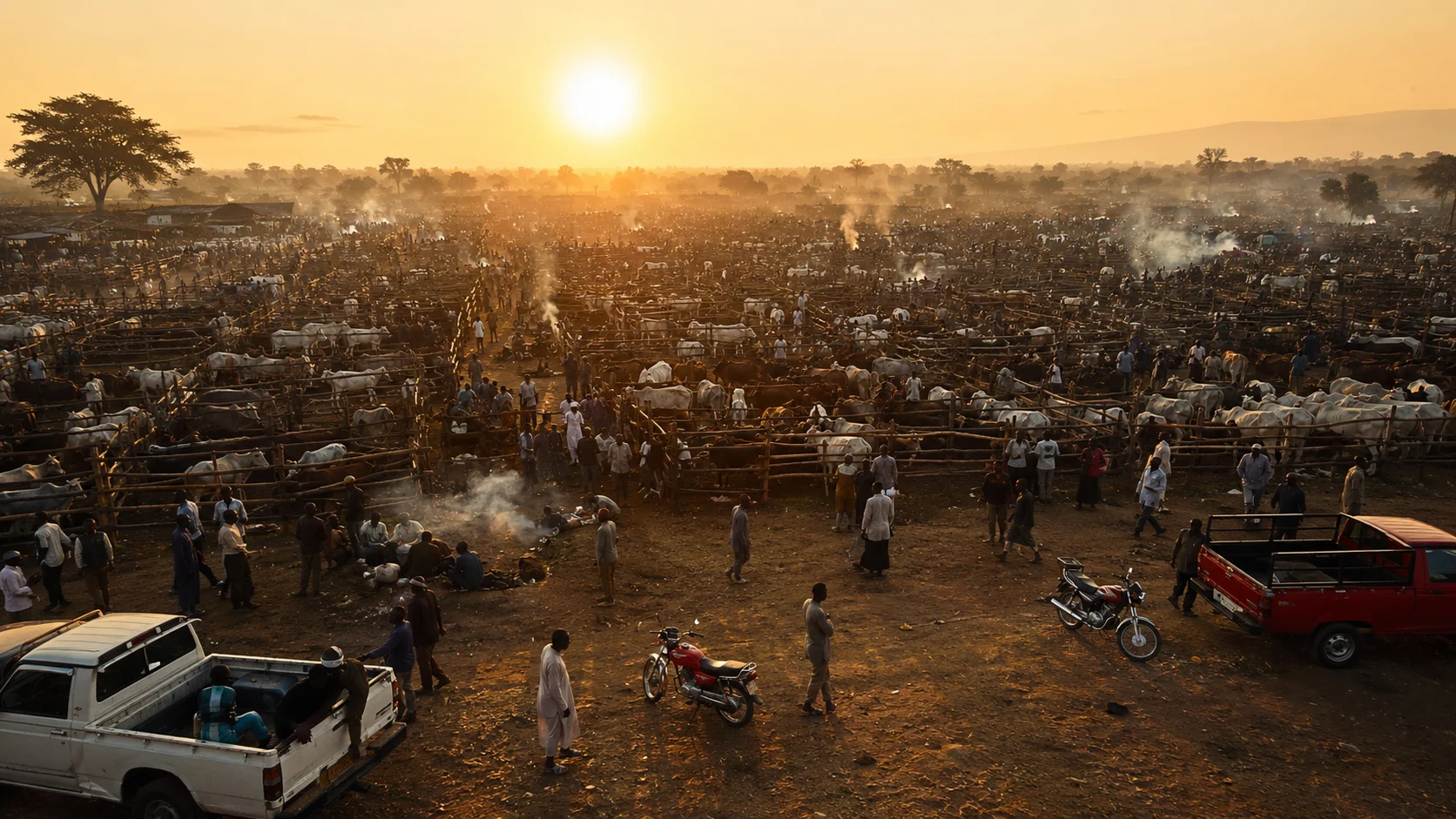
A practical guide to the major livestock markets across Nigeria, Kenya, South Africa, Ethiopia and beyond — trading days, dominant breeds, and what to expect.
 Adamu BelloSenior Market Analyst · Kano, Nigeria
How African cattle markets work
Where you trade can be worth as much as what you trade. The same bull can fetch wildly different prices depending on which market it ends up in, who is buying that day, and how the price is set. Africa's cattle change hands through several very different kinds of marketplace, and knowing which is which — and how each one sets its prices — is the first and most valuable skill of a successful trader.
At one end sit the informal roadside markets and the great weekly livestock markets, where prices are set entirely by face-to-face negotiation and the animal is sold on appearance, with no scale in sight. A buyer estimates the weight and condition by eye and by feel, and a price is haggled out, often through a broker who knows both parties. At the other end are the formal auction houses, common in southern Africa, where animals are weighed, graded by age and fat cover, and sold to the highest bidder by the kilogram, with the price published afterwards for all to see. In between are abattoir-gate sales, where processors buy directly from producers, and a fast-growing layer of digital and mobile platforms that connect buyers and sellers by phone and settle by mobile money.
Across all of these, certain features recur and shape every deal. There is the broker or middleman — the dillali in Hausa-speaking markets — who knows both sides, vouches for the animal and the money, and takes a commission for matching them. There are the market fees levied by the local authority or market union for the right to trade. And there is, increasingly, a layer of veterinary inspection and movement permits that a serious trader ignores at their peril, because it is the gateway to the higher-value formal and export markets. Understanding this landscape is what lets you route your animals to where their breed is in demand and their price is highest, instead of simply selling at the nearest gate.
The broker, trust, and how a price is reached
In most African livestock markets the broker is not an optional extra — he is the institution that makes trade possible at all. In a market where strangers meet, where the animal cannot be weighed and the cash cannot be verified, the broker is the bridge of trust. He knows the seller and can vouch that the animal is not stolen and not sick; he knows the buyer and can vouch that the money is good. For this he takes a commission, usually from the seller, sometimes split, and in return he carries the reputational risk if the deal goes bad. A trader who builds a relationship with a few honest, well-connected brokers in his main markets has an asset worth more than any single good buy.
Price discovery, in the negotiation markets, is an art rather than a science. The buyer estimates liveweight by eye and by running a hand over the flank, ribs and rump, judges age from the teeth, and forms a private valuation. The opening offer is deliberately low, the asking price deliberately high, and the two are walked toward each other through several rounds, often with the broker shuttling between parties who never speak directly. The animal's breed, sex, age, condition and the urgency of both sides all feed into the final number. This is precisely why arriving with a reference price from CattlePrice is so powerful: it anchors your private valuation in real data, so you neither overpay in the heat of the haggle nor insult a seller with an offer so low he walks away.
Timing: trading days and the seasonal calendar
When you go to market matters almost as much as which market you choose. Many of Africa's great livestock markets are weekly, peaking on one or two specific days — Dahra in Senegal on a Sunday, Garissa in Kenya around midweek — and a thin off-day market offers little choice and weak competition among buyers. Terminal city markets like Kara or Pugu trade daily but still have rhythms, busiest at the start of the week as butchers restock. Arrive on the peak day and you find the widest selection and the keenest pricing; arrive off-peak and you trade in a shallow pool.
The seasonal calendar overlays everything. Prices firm up before every major festival — Eid al-Adha above all, but also Christmas, the New Year and local celebrations — and soften in the lean dry season when distressed owners destock all at once. The shrewd trader buys in the trough and sells into the peak, using the festival and seasonal calendar as deliberately as a farmer uses the rains. Check the going rate and the trend on CattlePrice before every trip, because in a market that moves with the season, last month's price is not this month's.
Nigeria: the continent's biggest cattle trade
Nigeria moves more cattle than any other country in West Africa, along a vast north-to-south corridor that carries animals from the Sahelian supply zones of the far north down to the hungry, wealthy cities of the coast. For anyone trading in the region, its markets are the ones to know:
- Kara Market (Agbado-Oke Aro, Ogun State): the main supply point for Lagos and its 20-million-strong population, trading daily and handling enormous volumes of White Fulani and Sokoto Gudali cattle.
- Maiduguri Monday Market: the largest in the northeast, taking animals directly from herding communities across Borno, Yobe and beyond, and a key assembly point for the whole corridor.
- Durumi / Kugbo (Abuja): the federal capital's main demand centre, where a large civil-service and middle-class population supports firm, reliable prices.
- Kano Central Market: the northern price-setter and one of West Africa's historic livestock hubs — what Kano does, the rest of the corridor tends to follow.
- Ibadan: the southwest's great interior hub, feeding one of Nigeria's largest cities and the surrounding region.
The defining feature of Nigerian trade is the transport corridor itself, and the price spread it creates. Cattle bought cheaply in Kano or Maiduguri gain 30–40% in price by the time they reach Lagos — a gap that is mostly transport, feeding and watering on a multi-day road journey, and the chain of middlemen who organise the movement. For a trader, understanding and capturing a slice of that spread is the whole game. For a buyer, it means the further north you are willing to travel, the cheaper the animal. Always check current Nigeria cattle prices before you set out, so you know which end of the spread you are trading on.
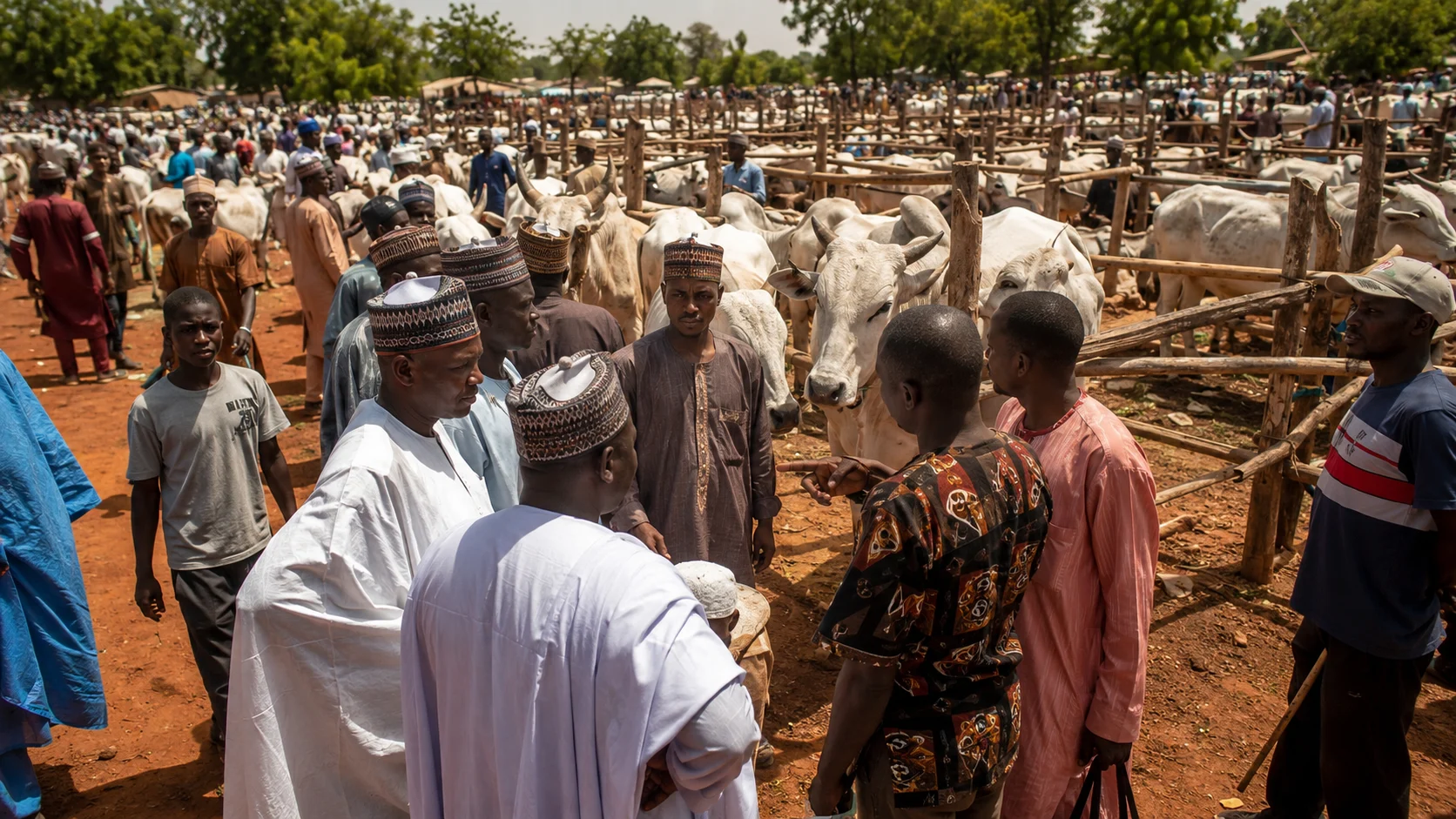
Kenya
Kenya's trade splits cleanly between pastoral supply markets, out in the rangelands where the animals are raised, and urban demand centres near the big cities. The big names a trader should know are Kitengela and Isinya just south of Nairobi, the Dagoretti slaughter complex on the city's edge, and the great pastoral markets of Garissa in the east and Lodwar in Turkana, which draw Boran and Sahiwal cattle off the dry northern rangelands. The Kenya Meat Commission is a significant institutional buyer that helps set a floor under prices. Dairy stock, by contrast, trades through the green highland districts of Kiambu and Nyandarua. Kenya is also ahead of much of the continent on digital trade, with platforms such as Cowsoko and M-Livestock connecting buyers and sellers by phone and bringing price transparency to a traditionally opaque market. See Kenya prices.
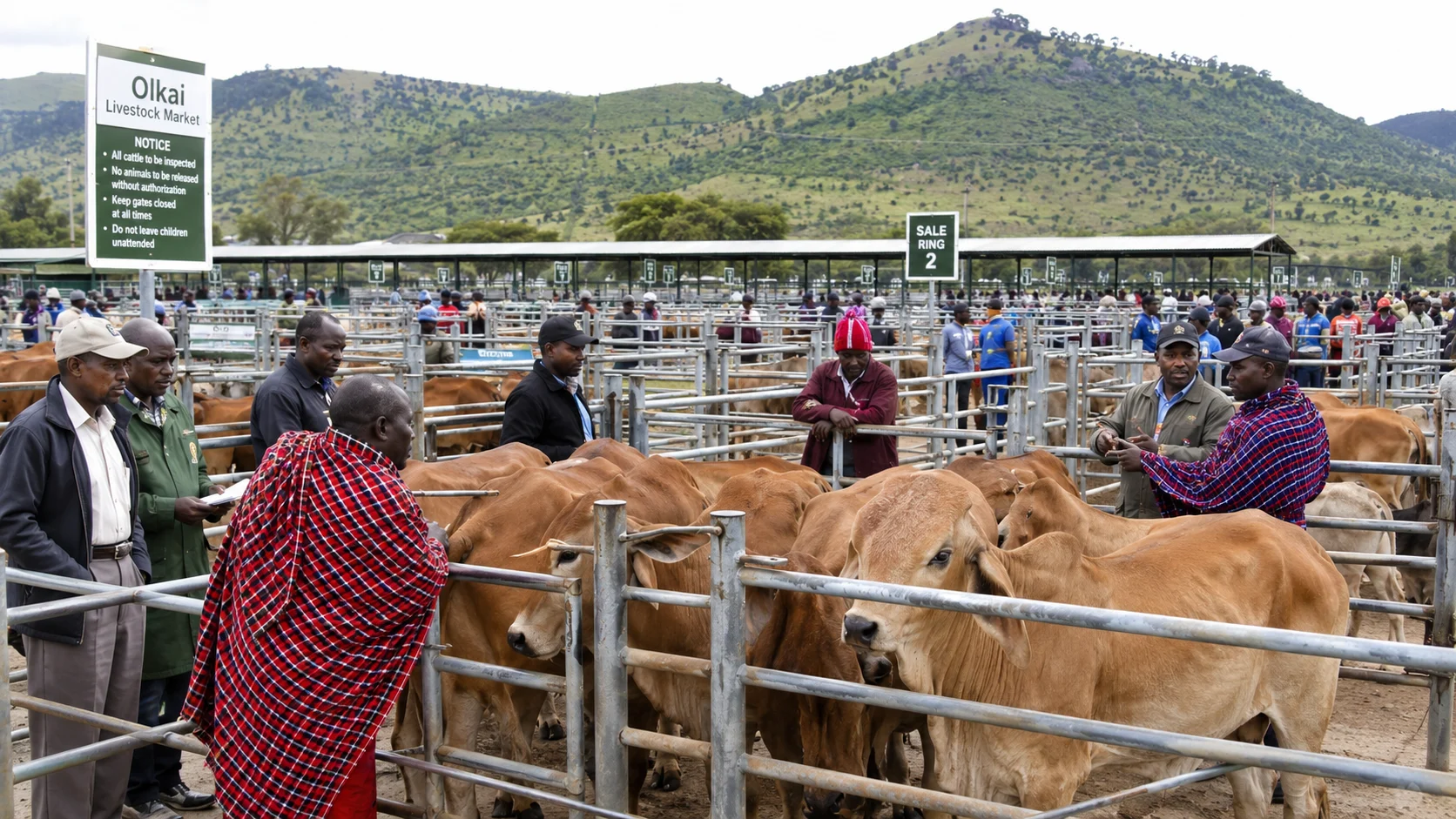
South Africa
South Africa runs the continent's most formalised and transparent cattle-marketing system, and it is worth studying as a model of where other markets may head. Cattle are sold through established auction houses, province by province, where they are weighed and sold by the kilogram rather than haggled over by eye. The Red Meat Producers' Organisation (RPO) publishes weekly price reporting, so every farmer knows the going rate. A national grading system — A, B and C grades, based on age and fat cover — standardises quality and lets buyers bid with confidence on animals they have not raised themselves. Online platforms such as Digikraal and AMTrends have brought the auction ring onto the phone and the laptop, widening the pool of buyers. Commercial feedlots are major buyers, taking weaners and finishing Bonsmara and other beef breeds on grain for the supermarket trade. See South Africa prices.
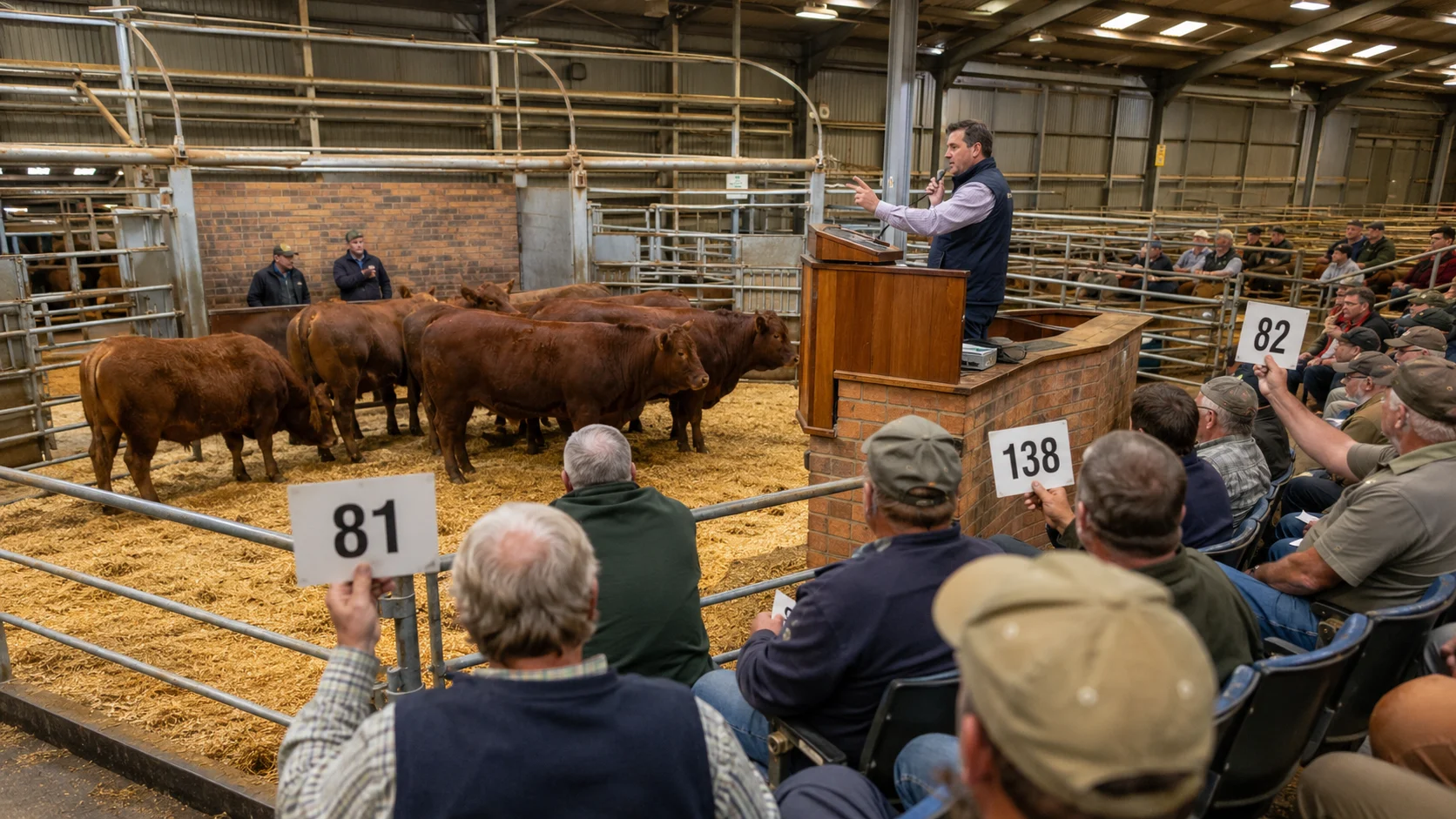
Ethiopia
Ethiopia has one of the largest cattle populations on earth and a sprawling market network tracked, in part, by the Ethiopia Livestock Market Information System (ELMIS) across 39 or more recognised locations. The busiest hubs are the terminal markets around Addis Ababa, the assembly market of Adama on the corridor toward the Djibouti export ports, and Dire Dawa in the east. The export abattoirs are powerful buyers, competing directly with domestic demand for the best-conditioned animals and lifting prices when export orders are strong. As across much of the Horn of Africa, a layered broker system intermediates most transactions, with animals often changing hands several times between the pastoralist who raised them and the abattoir or city butcher who finally buys them. See Ethiopia prices.
Ghana, Tanzania, Uganda and Senegal
Ghana 🇬🇭 leans on Tamale in the north as its great assembly market and the Kumasi abattoir area as its national price-setter, with much of its supply walking or trucking in from Burkina Faso and Mali. Tanzania 🇹🇿 trades its Tanzania Shorthorn Zebu — which makes up the vast majority of its 28-million-strong herd — through Pugu in Dar es Salaam and a wide network of primary and secondary markets feeding the coast and the cities. Uganda 🇺🇬 supplies Kampala from central markets where the magnificent Ankole Longhorn commands a cultural premium well above its pure meat value. Senegal 🇸🇳 centres on the historic Dahra Djoloff weekly market in the Louga region, one of West Africa's oldest, with demand exploding every year around Tabaski. Each country has its own trading days, dominant breeds and seasonal price rhythms — you can browse them all from the country price pages and the full market directory.
Tips for first-time market visitors
If you are new to the cattle market, a handful of simple habits will save you money, time and trouble:
- Arrive early. The best animals sell first, often within the first hour and before the casual crowd has even arrived. The latecomer chooses from what is left.
- Bring cash. Mobile money is spreading fast, but many markets and traditional sellers still deal only in physical notes, and a buyer who cannot pay on the spot loses the animal.
- Inspect before you agree. Check weight and condition, teeth for age, hooves for soundness, and eyes and nose for illness. Never buy on the seller's word alone, however friendly.
- Settle transport before you buy. Knowing your haulage cost changes what you can afford to pay for the animal itself, and prevents a nasty surprise at the market gate.
- Know the going rate. Check CattlePrice before you leave home so you can recognise a fair price instantly — and have the confidence to walk away from a bad one, which is the most powerful move any buyer can make.
Finally, build relationships rather than chasing one-off bargains. The traders who consistently do best are known faces at their main markets — they have brokers who trust them, sellers who offer them first refusal on a good animal, and transporters who give them a fair rate. That reputation is earned over many visits by paying promptly, dealing honestly and turning up reliably, and it is worth more over a career than any single sharp deal. Find the right market for your breed in our full market directory, study the price trend on each country page, and always value your animals before you trade with the free Herd Valuation tool.