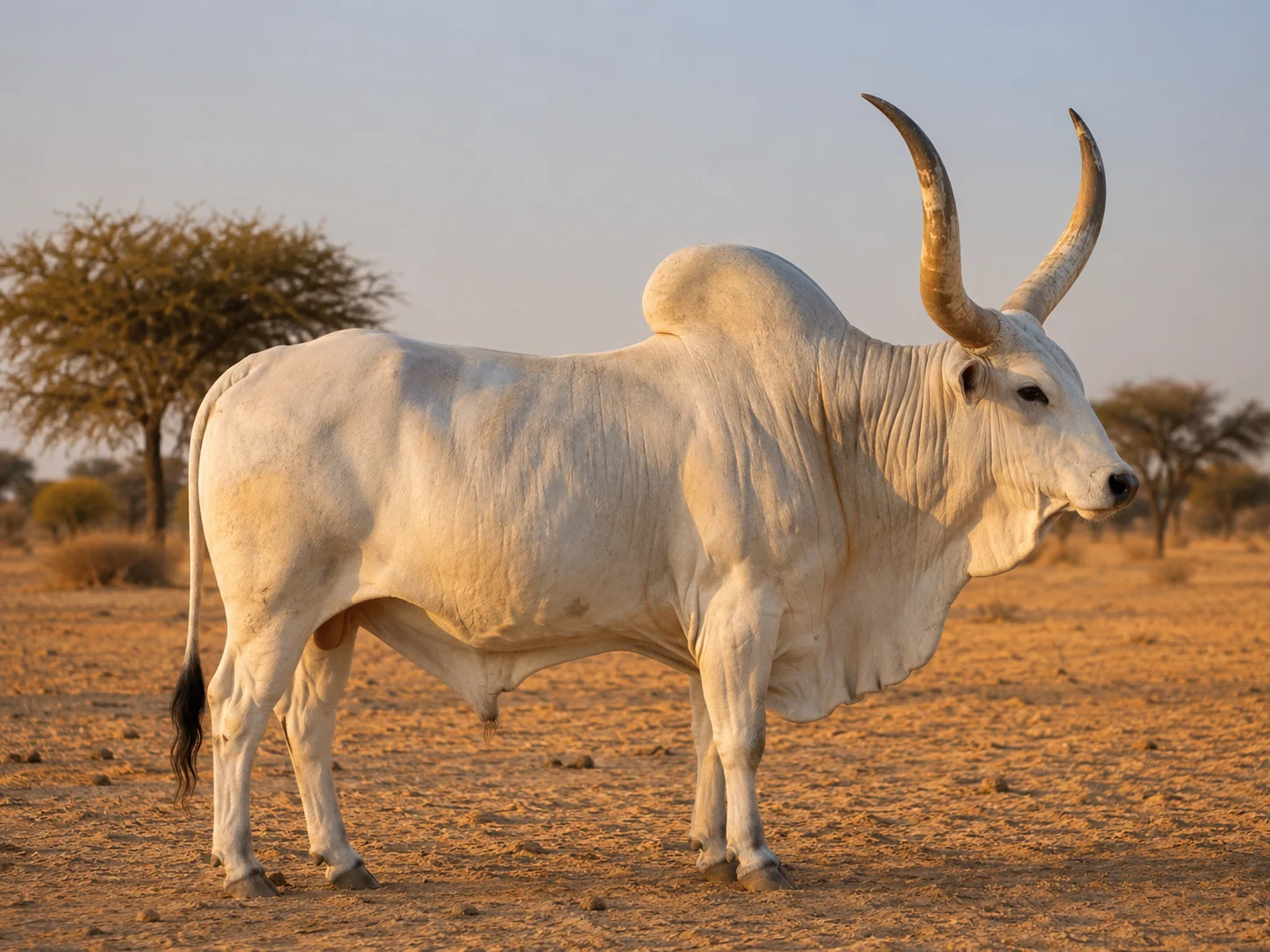
About the Gobra Zebu
The Gobra Zebu is a beef breed found primarily in Senegal, mauritania and mali, and is one of the defining cattle of West Africa. Senegal's dominant breed. Mature bulls typically weigh between 350 and 500 kg, while cows range from 250 to 350 kg. For African cattle owners, the Gobra Zebu represents a practical balance between productivity, hardiness, and adaptation to local conditions — qualities that directly affect what the animal is worth at market and how profitably it can be kept.
Like most indigenous and adapted African breeds, the Gobra Zebu is valued for its tolerance of heat, its ability to walk long distances to water and grazing, and its capacity to convert low-quality forage into saleable weight.
As a beef animal, the value of the Gobra Zebu is driven by growth rate, carcass quality and finished liveweight. Understanding these drivers helps owners decide when to sell, what to feed, and which animals to keep for breeding.
Care & management
Good management of the Gobra Zebu starts with matching the animal to its environment. This breed is already adapted to West Africa, so the goal for most owners is not to fight that adaptation but to support it with clean water, adequate grazing or forage, basic disease control, and shelter from extreme weather.
Housing & environment
In extensive systems the Gobra Zebu is typically kept on open rangeland and kraaled at night for protection against theft and predators. Where land is limited, a simple shaded enclosure with a dry, well-drained floor reduces lameness and foot rot. Always ensure animals can reach clean water daily — a mature Gobra Zebu can drink 30–50 litres per day in hot weather, and water shortage is one of the fastest ways to lose body condition and value.
Routine health
Build a simple herd-health calendar: deworm at the start and end of the rains, control external parasites (ticks and flies) through dipping or spraying, and keep vaccinations current for the diseases that matter in your area. Because this breed does not carry strong natural resistance to the major tick-borne and viral diseases, tick control and vaccination are especially important. Use our vaccination calendar to plan the year.
Feeding requirements
The Gobra Zebu performs best on a diet built around good grazing, supplemented strategically rather than continuously. As a rule of thumb, a mature animal eats roughly 2–3% of its body weight in dry matter per day — for a 300 kg cow that is around 8 kg of dry matter daily.
- Wet season: Rely on natural pasture, which is at its most nutritious. This is the cheapest period to add weight — time your fattening to capture it.
- Dry season: Supplement with hay, crop residues (maize stover, groundnut haulms), and a protein or energy lick. Even hardy smaller-framed animals need a maintenance ration to hold value through the dry months.
- Minerals & salt: Provide a mineral lick year-round. Phosphorus and salt deficiency is common on African rangeland and quietly reduces fertility and growth.
- Finishing: For market animals, a 60–120 day finishing period on a higher-energy ration can sharply lift sale weight and price. Model the economics first with our feedlot profitability calculator.
Breeding advice
Reproduction is where long-term herd value is built. A cow that calves regularly and rears a healthy calf every 12–14 months is worth far more over her lifetime than a larger animal that calves irregularly. Select Gobra Zebu breeding females for fertility, mothering ability and body condition, not size alone.
- Bull selection: Use a structurally sound bull with good libido and known parentage. One bull serves roughly 25–35 cows under natural mating.
- Heifer age: Aim to first breed heifers when they reach about 65% of mature weight — for the Gobra Zebu that is roughly 195 kg — rather than by age alone.
- Calving season: Where possible, plan calving so that the cow's peak nutritional demand lines up with the rains and abundant grazing.
- Record keeping: Even simple records of which cows calve, when, and how their calves grow will pay for themselves within a season by guiding culling decisions.
To project how your herd grows over time, use the herd growth projector.