Cross-Border Cattle Trade Routes in Africa
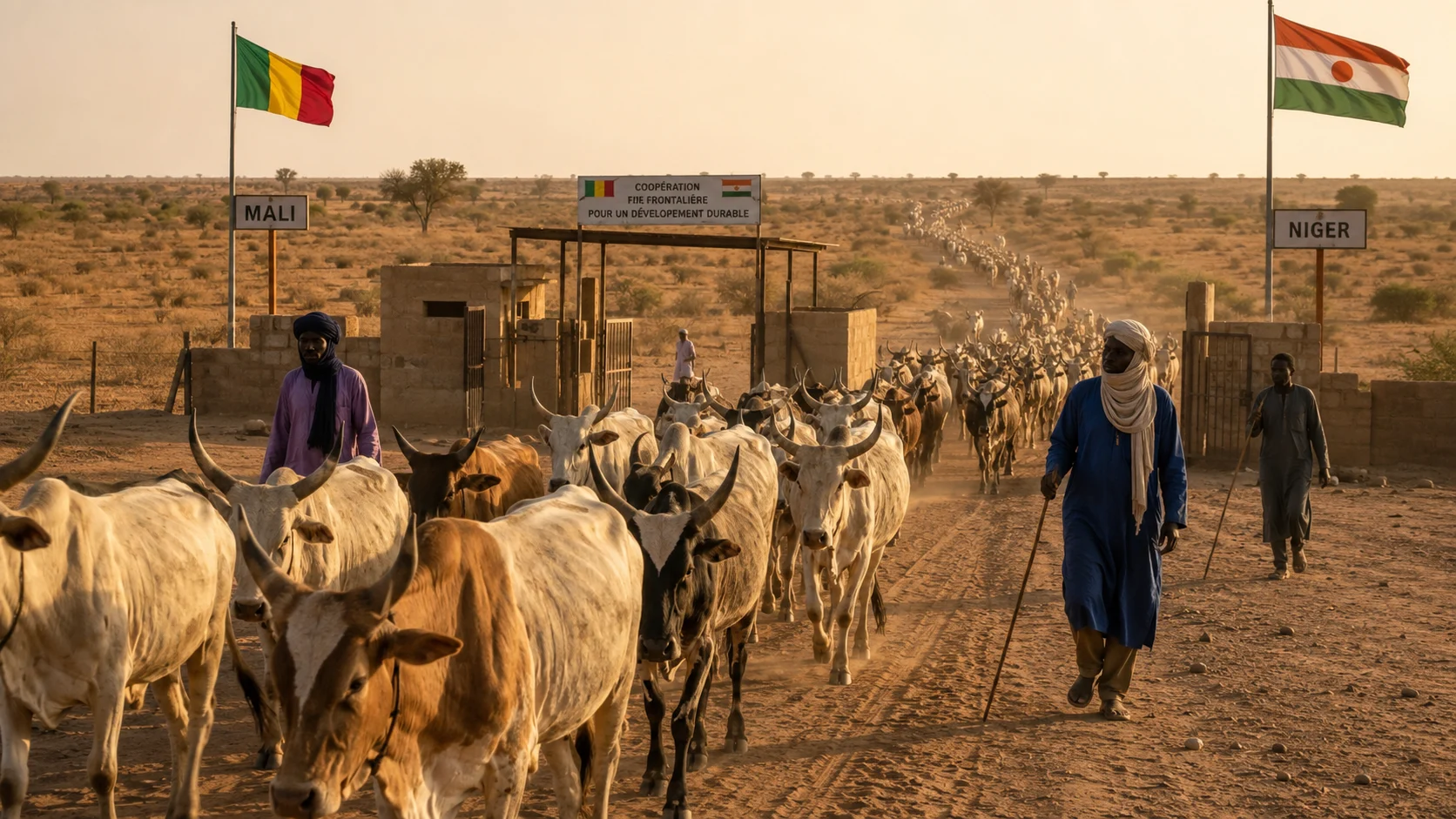
From the Sahel corridors to the Horn of Africa export ports, informal and formal cattle trade moves millions of animals across borders each year. Here is how it works.
 Fatou DialloAgribusiness & Export Editor · Dakar, Senegal
The scale of Africa's cattle trade
Africa is home to roughly 381 million cattle, and a remarkable share of that living wealth is in constant motion across borders. Every year, millions of animals are traded from one country to another — and most of that movement is informal, undocumented, and entirely invisible in official statistics. The formal, recorded trade that appears in trade ministries' spreadsheets is merely the tip of an enormous iceberg; beneath it flows a vast, ancient, mostly cashless economy of cattle on the hoof.
Why do cattle cross borders at all? Three forces drive it, and understanding them explains most of what happens to prices across the continent. The first is price arbitrage: animals are cheap in the dry, grass-rich Sahelian supply zones where they are bred in huge numbers, and expensive in the wealthy, protein-hungry coastal demand centres — and traders exist to close that gap and pocket the difference. The second is seasonal migration, as pastoralists move their herds across boundaries that mean little to a cow in search of water and pasture, selling and buying as they go. The third is export — to the Middle East and, for a privileged few certified producers, the European Union, where African beef can command a substantial premium. Trace these three flows and you have traced the nervous system of the African cattle economy.
Sahel-to-coast corridors (West Africa)
The largest single cattle trade flow in West Africa runs from the landlocked Sahel — Niger, Burkina Faso and Mali — south to the coastal markets of Nigeria, Ghana and Côte d'Ivoire. The dry interior breeds the animals; the wet, wealthy coast eats them. Three great corridors carry the bulk of this trade:
- Route 1: Niger → Kano → Lagos, feeding Nigeria's southern megacities from the herds of the central Sahel.
- Route 2: Burkina Faso → Tamale → Kumasi → Accra, the spine of Ghana's cattle supply.
- Route 3: Mali → Bamako → Abidjan, supplying Côte d'Ivoire's commercial capital and its large urban population.
The economics are compelling and explain why the trade has run for centuries. A cow purchased for around XOF 300,000 in Burkina Faso can sell for the equivalent of GHS 12,000 or more in Accra — but that headline margin must cover a long list of real costs: road or rail transport, feeding and watering the animal along the way, broker fees at each handover, official and unofficial border-crossing costs, and the vaccination certificates that formal trade requires. One structural advantage smooths much of the West African trade: most Sahelian suppliers and several coastal buyers share the CFA franc, so between, say, Burkina Faso and Côte d'Ivoire there is no currency exchange to erode the margin. Where the trade crosses into the naira or cedi zones, however, exchange-rate swings become a major risk that can turn a good trade into a loss between purchase and sale. The dominant animals on these routes are the hardy, trek-tolerant White Fulani and Gobra Zebu, bred over generations to walk long distances and hold condition on poor grazing.
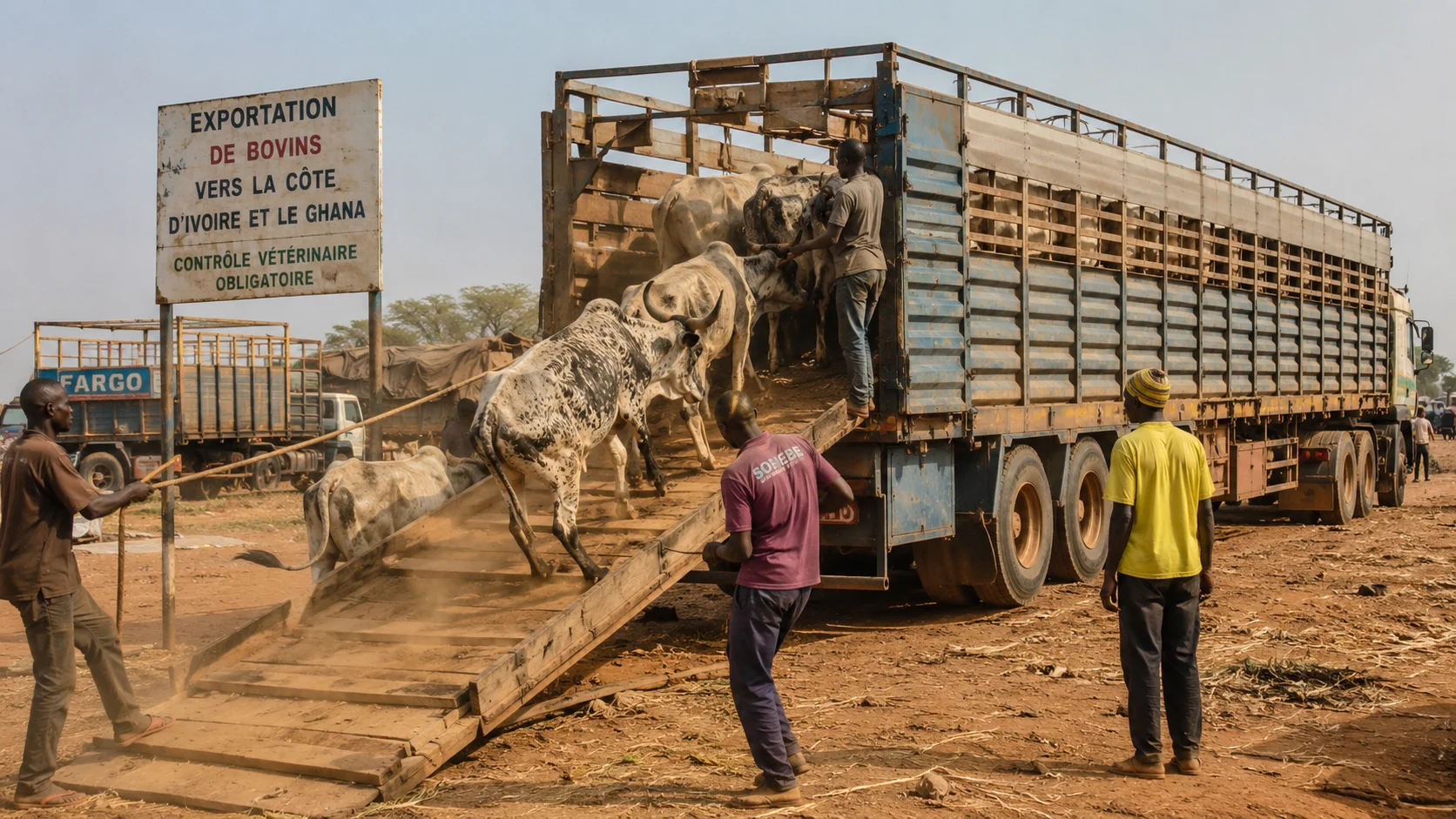
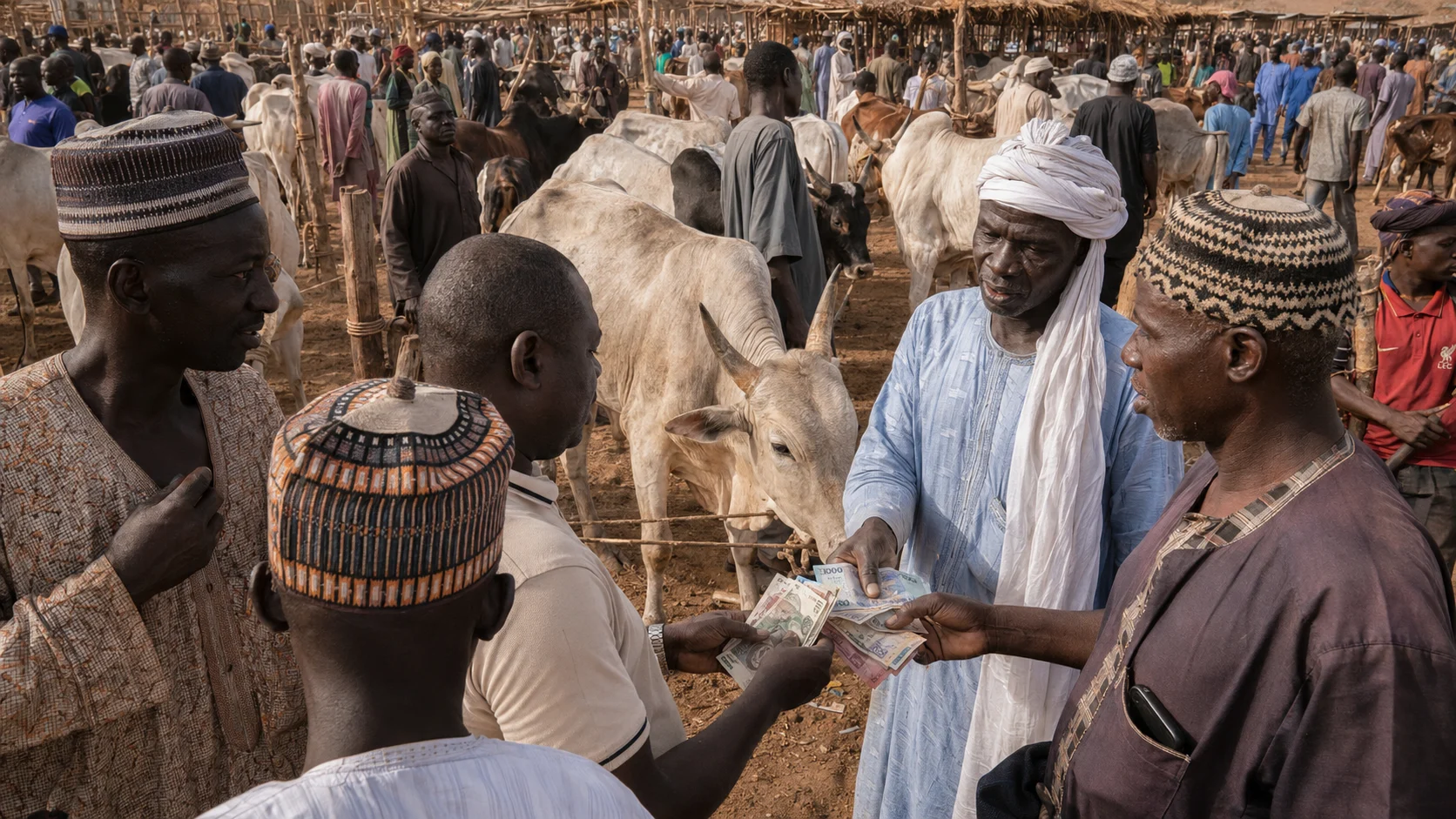
It is worth understanding how value is added — and skimmed — at each stage of the corridor, because it explains why the animal that cost XOF 300,000 in the bush is so much dearer on the coast. The animal typically passes through several hands: the pastoralist who bred it sells to a collector at a primary market; the collector aggregates a truckload and sells to a long-distance trader; that trader moves the animals across the border and one or more national markets to a wholesaler near the city of consumption; and the wholesaler sells to the butcher who finally slaughters and retails the meat. Each link adds a real cost — transport, feed, water, market fees, the broker's commission — and each takes a margin for the risk and capital involved. The headline price gap between Burkina and Accra is not one trader's windfall; it is the sum of a dozen smaller margins and costs strung along a thousand kilometres of road. The corridors persist because, even after all those hands, the coastal price is high enough to reward the whole chain.
Horn of Africa: Ethiopia to the Middle East
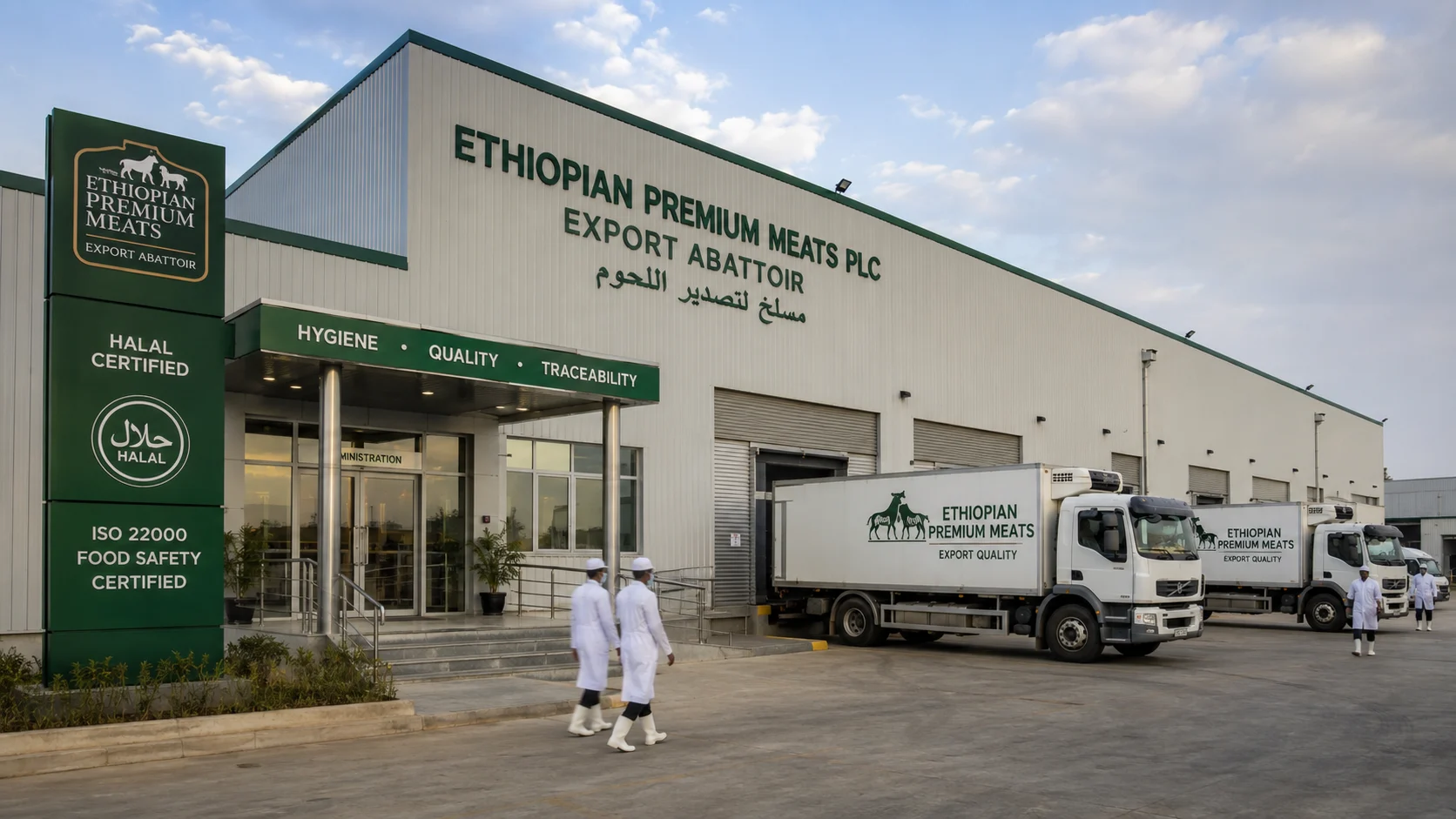
The second-largest export corridor on the continent runs from the Horn of Africa across the Red Sea to the Gulf. Ethiopia and Somalia ship live animals and chilled meat to the United Arab Emirates, Saudi Arabia, Qatar and Kuwait, with demand peaking sharply around the Hajj pilgrimage and the month of Ramadan. Nine Ethiopian export abattoirs ship on the order of 150 metric tonnes a week between them, while Somalia's vast livestock trade funnels through the Berbera corridor to the Red Sea, and other animals route out through the port of Djibouti.
The prize is large and growing: East Africa earns well over $870 million a year from livestock and meat exports. Middle Eastern buyers favour African cattle for sound commercial reasons — the animals are grass-fed, which suits local tastes, and they are considerably cheaper than Australian or Brazilian imports, while the Horn is close enough for live shipment across the Red Sea. But the corridor is fragile, and its fragility is a lesson for the whole continent. Halal certification is mandatory and must be maintained to exacting standards. Quality can be inconsistent across a fragmented supply base. And, above all, a single outbreak of foot and mouth disease can suspend a country's export licence for months at a stroke, collapsing prices for every producer at once — not just the unlucky owner whose herd was infected. The animals driving this trade are often the Boran and the hardy local zebu types. See Ethiopia prices.
Southern Africa: Botswana's EU-certified beef
Southern Africa shows what formal, high-value, certified cattle export can look like when it is done properly, and it stands in deliberate contrast to the informal trade of the north. Botswana is the continental model: through tightly managed, EU-certified foot-and-mouth-free zones, rigorous veterinary control and a national livestock traceability system that can track an animal from birth to slaughter, its beef accesses the premium European market, where it commands 30–50% more than ordinary regional prices. Namibia runs a similarly disciplined and respected beef-export programme. South Africa, by contrast, has struggled with recurring FMD outbreaks since 2019 that have repeatedly disrupted its export status and cost its producers dearly — a cautionary tale of how quickly hard-won market access can be lost. Zimbabwe, with its large national herd and a proud cattle culture, has the raw potential to be a major exporter but has historically been held back by economic crisis and trade barriers. The lesson for every African cattle owner is unmistakable: disease control is not a veterinary footnote, it is the very foundation of export value. See South Africa prices.
East African Community internal trade
Not all cross-border trade points outward at the Gulf or Europe. Within the East African Community, a brisk and valuable internal livestock trade flows along lines drawn by pastoral movement and price differences between neighbours: Kenya and Tanzania exchange animals across their long shared border, Uganda is a steady supplier of beef cattle into Kenya, and Rwanda and Burundi draw stock from northern Tanzania. This regional trade is driven by the same arbitrage logic as the great export corridors, just at a shorter range, and EAC trade agreements have gradually reduced the tariffs and paperwork on legal movement, slowly making the formal route more attractive than smuggling. See Kenya prices.
The direction of these regional flows can flip with the seasons and the rains. In a good year, a surplus region exports to a deficit neighbour; after a drought, the same border may see cattle moving the other way as herders sell down or seek pasture across the line. Kenya, with its large urban demand and its periodic droughts, is a frequent net importer of live animals from Tanzania, Uganda, Somalia and Ethiopia, and its prices ripple outward into all of those supply zones — when Nairobi's butchers pay more, the effect is felt at markets hundreds of kilometres away across three borders. For an owner near any of these frontiers, the practical lesson is to watch not only your own national market but the market on the other side of the border, because the higher of the two is where your animals are really worth selling, and the gap between them is an opportunity that moves with the weather.
Challenges and risks in cross-border trade
For all its scale and value, cross-border cattle trade is difficult, costly and genuinely risky. The hazards are real, recurring, and worth weighing carefully before committing animals or money to a long route:
- Disease barriers: a single FMD outbreak can ban a country's exports for months — comfortably the number-one trade risk on the continent, and one entirely outside any individual trader's control.
- Informal crossings: a great deal of trade moves through unofficial routes with no veterinary inspection, which spreads disease and locks the animals out of the certified markets that pay the best prices.
- Checkpoints and unofficial fees: road blocks and "facilitation payments" along the corridor eat steadily into margins and are impossible to budget precisely.
- Security: cattle rustling and banditry threaten both herds and the herders who drive them on remote, lightly policed trade routes.
- Currency risk: outside the shared CFA franc zone, exchange-rate swings between purchase and sale can quietly wipe out a trade's entire profit.
- Documentation: movement permits, veterinary certificates and export licences are essential for any formal trade, vary by country, and are easy to get wrong in ways that cost time and money at the border.
Opportunities for African cattle owners
The same barriers that make cross-border trade hard also create real opportunity for those who do it properly, because they keep out the casual competition. Producers who invest in getting export-certified — meeting the veterinary, traceability and halal requirements, very often by working through an established abattoir or a producer cooperative that can shoulder the paperwork and the standards — can reach buyers who pay far above the local rate. The African Continental Free Trade Area (AfCFTA) promises, over time, to lower the tariff and regulatory walls between African markets and make legitimate cross-border trade simpler and cheaper. And a new generation of digital platforms is beginning to connect buyers and sellers directly across borders, chipping away at the information advantage that brokers have held for centuries.
Cooperation is the practical key that unlocks all of this for the smallholder. A single farmer with ten head cannot meet an export abattoir's volume, master its paperwork, or fund its certification — but a hundred such farmers in a well-run cooperative can do all three together, pooling animals to fill an order, sharing the cost of meeting standards, and negotiating from a position of real strength. Across the Sahel and the Horn, it is organised producer groups, not lone owners, that have managed to climb from the informal local trade into the formal, higher-value export chain. The barriers that look insurmountable to one farmer become manageable when the cost and the risk are shared.
For the individual owner, the path runs steadily from the local market toward formal value: understand the export landscape and which corridors touch your country, raise the disease status, condition and documentation of your herd so it qualifies for the better markets, and above all treat your cattle as the tradable financial asset they genuinely are rather than simply a store of wealth. Start by valuing your herd with the free Herd Valuation tool, study the routes and requirements on the export intelligence pages, and if you want your herd to earn a structured return like a financial product, explore the CattleBank model.