Dry Season Survival & Strategy for Cattle Owners
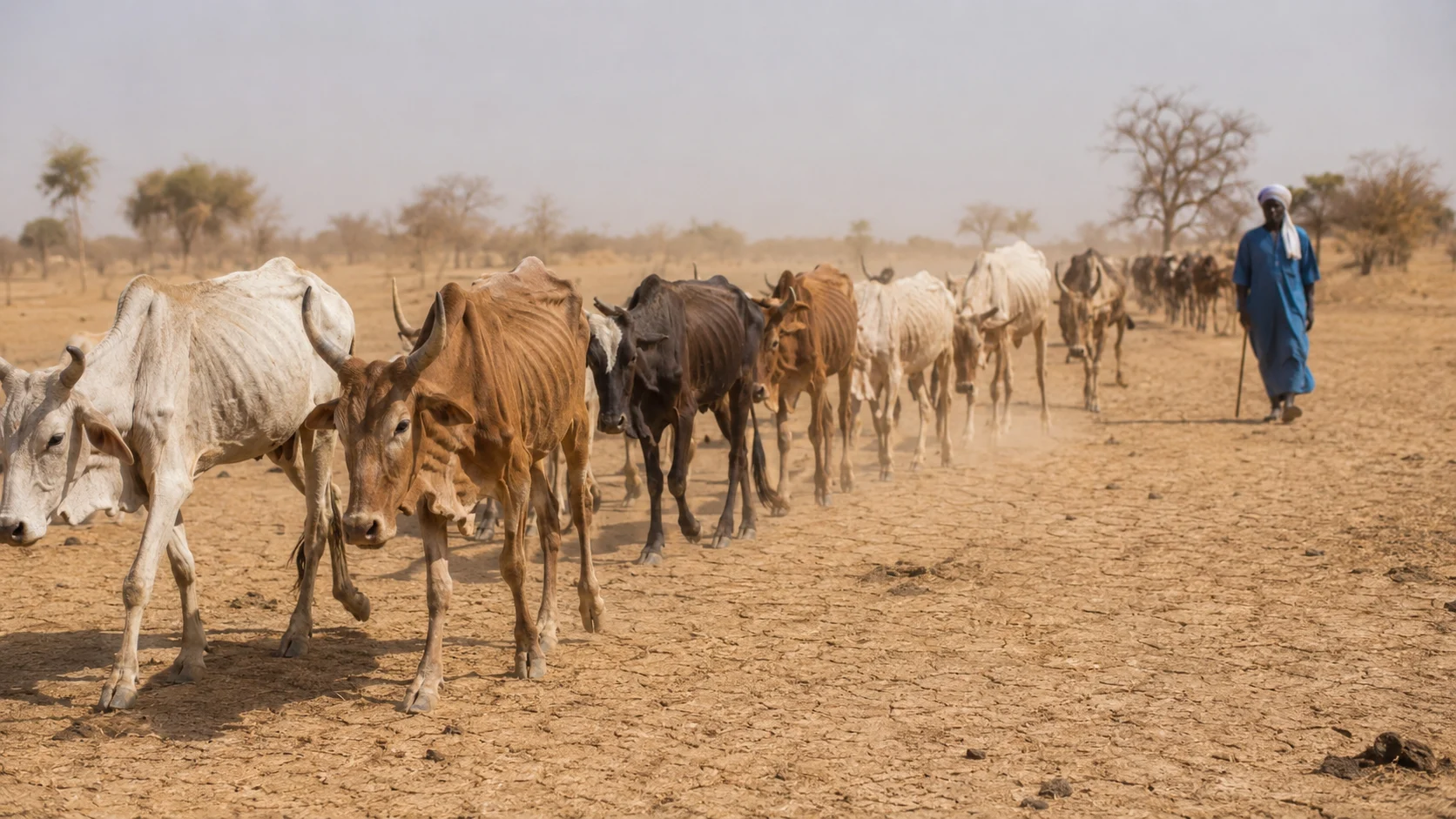
The dry season destroys more herd value than any disease. A clear water, feed and destocking plan protects both your animals and your money.
 Thabo MokoenaBreed & Farming Editor · Bloemfontein, South Africa
Why the dry season is the number-one wealth destroyer
Ask most African cattle owners what they fear most, and they will name a disease — foot and mouth, East Coast fever, lumpy skin. But the quiet, predictable killer that takes more value from more herds, year in and year out, is simply the dry season. More cattle die, and far more lose saleable value, in the dry months than from any single outbreak.
The mechanism is brutal and gradual. As grazing disappears and water shrinks, animals lose 20–30% of their body weight. Cows in poor condition fail to conceive, pregnant cows abort or produce weak calves, and lactating mothers dry up early, so the calf crop suffers too. Weakened stock become easy targets for tick-borne and opportunistic disease, and mortality climbs steadily through the season. Worst of all, the loss is financial as much as physical: a cow worth ₦1.5 million in good flesh at the start of the dry season can become a ₦800,000 skeleton three months later. And because every owner in the district is under the same pressure at the same time, the market is flooded and prices are at their annual lowest exactly when distressed owners are forced to sell. The cost of not planning is catastrophic.
The good news, and the reason this guide exists, is that the dry season is the most predictable event in the entire farming calendar. It arrives at the same time every year. Unlike an outbreak, it gives months of warning. That predictability is the farmer's greatest weapon — it means the damage is not fate, but the result of planning done or not done during the months of plenty that come before.
When is the dry season? A country calendar
The first step is knowing your window precisely, because every strategy below depends on acting before the worst arrives, not scrambling during it. The dry season falls at different times across the continent:
- Nigeria and West Africa: November to March, dominated by the dry, dusty Harmattan wind blowing off the Sahara. Pasture browns off quickly and water points shrink from December. See Nigeria.
- East Africa (Kenya, Tanzania): the long dry runs roughly June to October, with a shorter dry spell around January–February in some areas. See Kenya.
- Southern Africa (South Africa, Zimbabwe, Botswana): the dry winter, May to September — cold nights as well as no rain, a double stress on stock. See South Africa.
- Ethiopia: the main Bega dry season runs roughly October to February across much of the highlands. See Ethiopia.
Map your herd's location to its window, mark the calendar, and count backwards from the start of the dry months to set the deadlines for water, feed and destocking decisions. A plan with dates beats good intentions every time.
Water management: the first priority
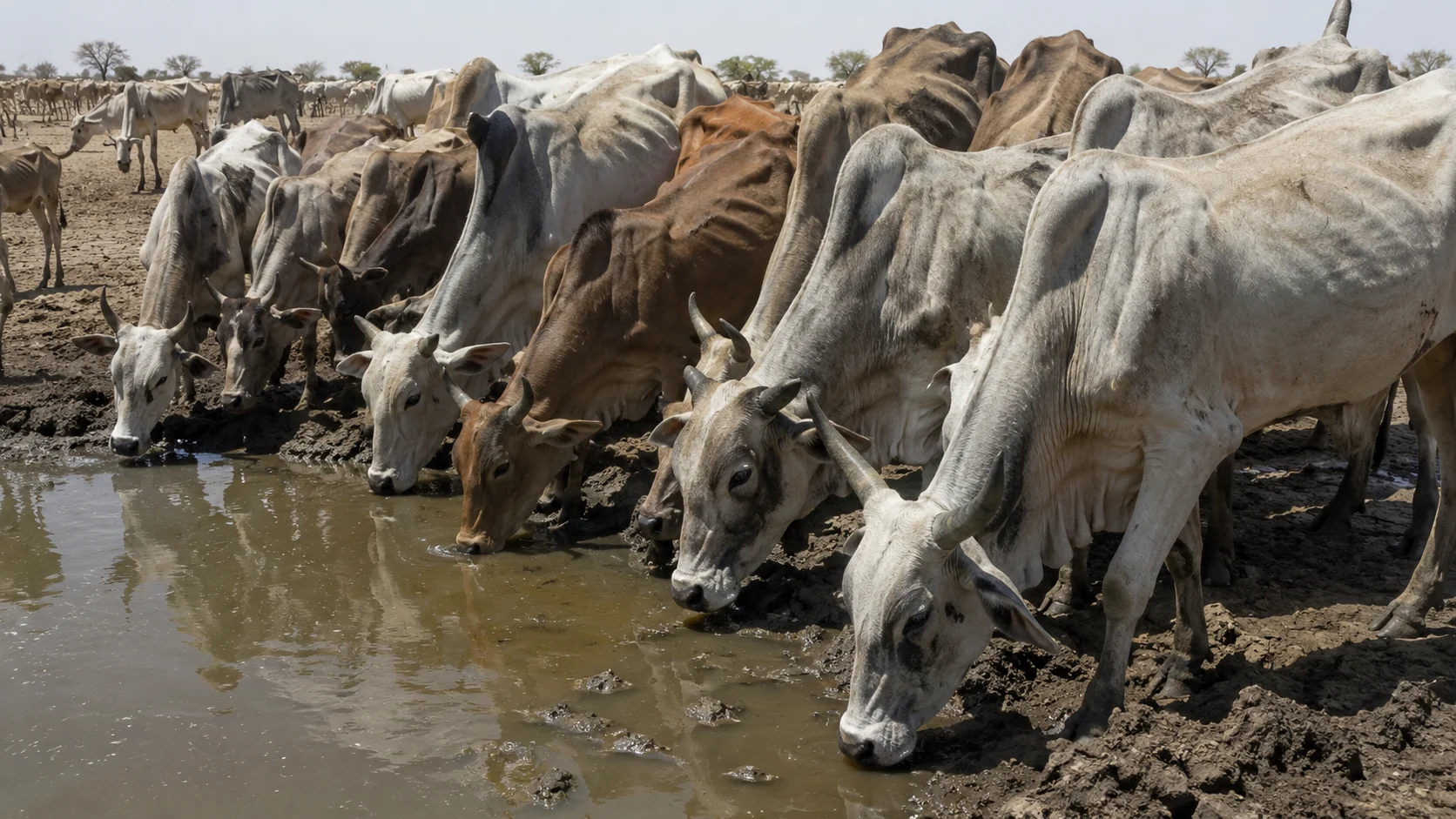
Before feed, before everything, comes water. A mature cow needs 40–60 litres per day, and in the heat of the dry season that requirement rises just as the available sources are shrinking. A herd that cannot reach clean water daily will lose condition faster than any feed programme can replace, and thirsty cattle will not eat properly even when feed is in front of them — so water is the foundation on which every other dry-season strategy rests.
The practical options are four. Drill a borehole for a permanent, drought-proof supply. Truck water in during the worst weeks, accepting the cost per litre as the price of survival. Harvest and store rainwater in tanks, ponds or earth dams during the rains, for release in the dry months. Or move the herd toward river valleys, swamps and permanent water, the traditional pastoralist answer. Most successful operations combine several of these rather than betting on one.
The economics are stark but firmly in favour of investment. A borehole in Nigeria might cost ₦500,000–2 million to drill and equip — a real sum that makes owners hesitate. But set it against the ₦20 million-plus value of the herd it keeps alive and productive, and against the weight (and therefore money) that thirsty cattle lose every dry season without it, and the calculation is not close. Water security is not an expense to be avoided; it is insurance on your single largest asset, and it pays for itself in a single bad year.
Feed strategies that keep weight on
Once water is secured, the goal is to hold body condition through the lean months so your animals retain their market value and your breeding cows stay fertile. The options, roughly in order of cost-effectiveness:
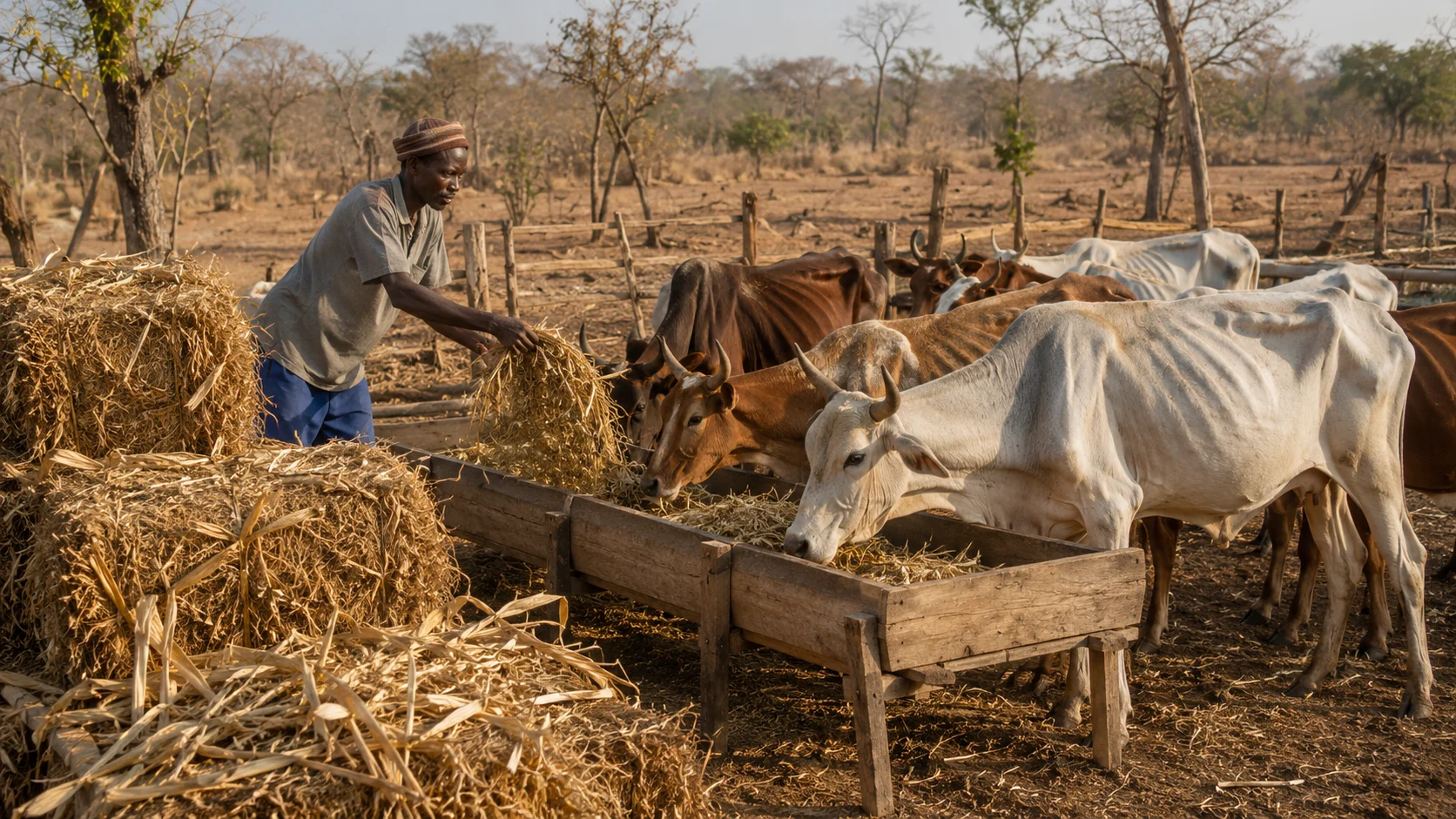
- Crop residues: groundnut haulms, maize and sorghum stover, cowpea vines, rice straw. Cheap or free if you farm, and far more valuable to a hungry cow in the dry season than they look lying in the field at harvest. Bale or stack and store them under cover.
- Hay: the single discipline that most separates survivors from casualties is cutting and storing grass during the rains, when it is abundant and at its most nutritious, for feeding back during the dry months. A hectare of conserved hay can carry several animals through the worst weeks.
- Concentrate feeds: bought by the kilogram, these lift energy and protein quickly and are the tool of choice for finishing or for keeping breeding cows in condition, but the cost varies widely by country and season, so they must be budgeted, not used blindly.
- Urea-molasses blocks: a cheap, slow-release lick that helps cattle digest poor-quality dry forage and stretches the value of crop residues.
- Browse: the leaves and pods of trees and shrubs, a traditional and badly underrated dry-season protein source that stays green long after the grass is gone.
The key is to budget, not improvise. Calculate your daily requirement — roughly 2–3% of body weight in dry matter per animal, so 10–12 kg for a typical cow — multiply by your herd size, and again by the 90–120 days of the dry season. That single number tells you how much forage you must conserve during the rains or buy in advance, before prices rise. Model it precisely with the Feed Cost Planner so the dry season never ambushes your cash flow, and so you know in October whether you have enough to reach the rains in March — while there is still time to do something about a shortfall.
Not every animal needs the same ration, and pretending they do wastes scarce, expensive feed. Prioritise ruthlessly. Pregnant cows in their last trimester and cows in early lactation have the highest needs — feed them first, because a thin breeding cow means a weak calf and a missed pregnancy, which is a loss that echoes for two years. Growing heifers being kept as replacements come next, since stunting them in the dry season permanently reduces their lifetime productivity. Mature dry cows and steers headed for sale can hold on a maintenance ration. Mineral and salt supplementation matters more in the dry season, not less: brown, mature forage is poor in phosphorus, and a simple lick keeps fertility and appetite up for very little money. The aim is not to keep every animal fat — that is unaffordable — but to keep the right animals in good enough condition to breed, rear and recover when the rains return.
When to sell: the destocking decision
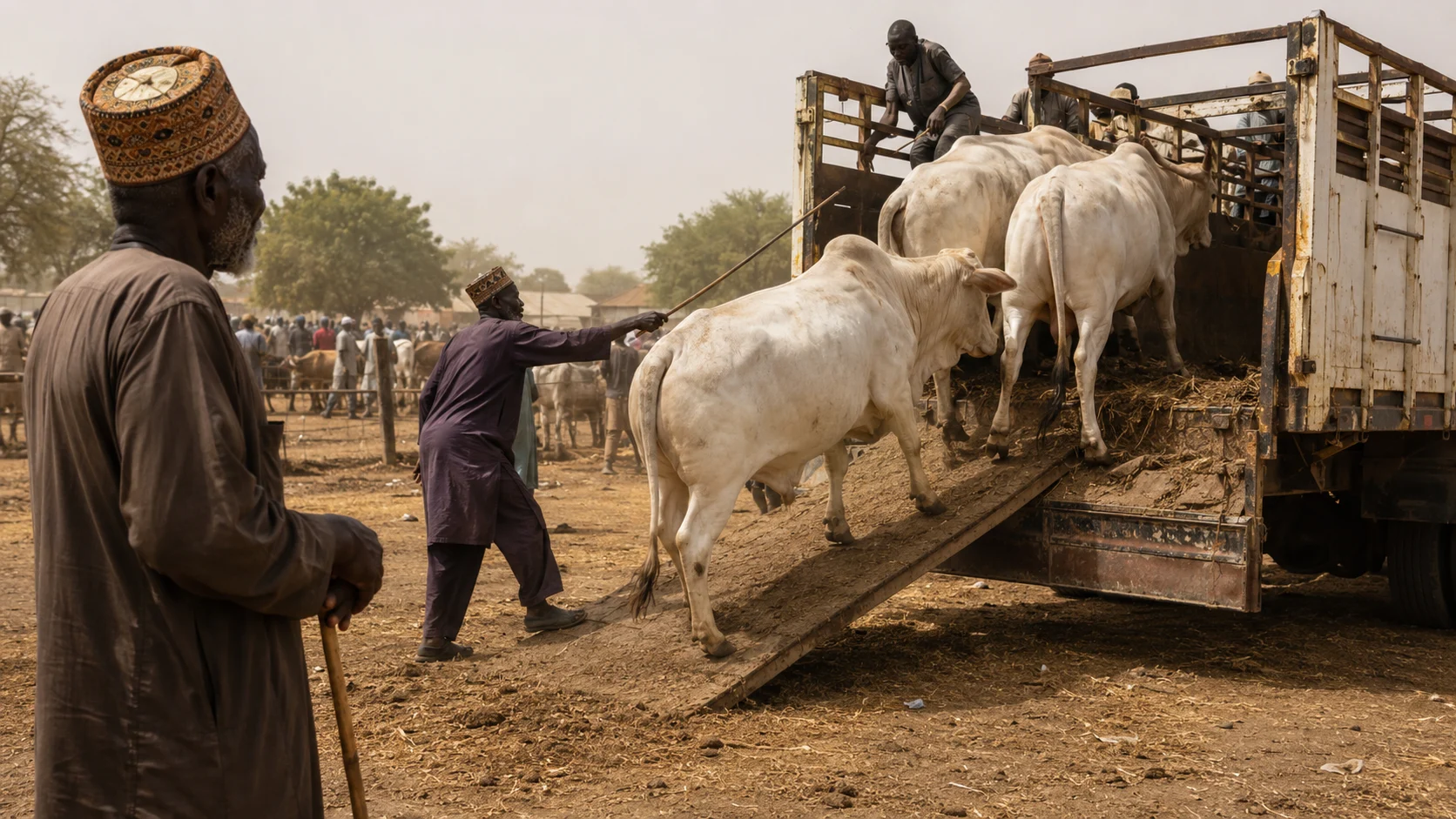
Strategic destocking is the hardest decision in cattle farming — and the most important one you will make each year. The principle is simple to state but emotionally difficult to act on: sell before your animals lose weight, not after. A fat cow in month one of the dry season is worth far more than the same cow gone thin in month three, and selling early also frees up grazing, water and cash to protect the animals you choose to keep.
Decide who goes and who stays before the pressure builds, while you can still think clearly and the market is still reasonable. Sell first: old cows past their breeding prime, steers and bullocks that are ready for the market anyway, surplus young males, and any animal carrying a chronic health problem that the dry season will only worsen. Keep: your productive breeding females, the young calves with their whole lives ahead of them, and the bulls carrying the strong genetics on which next year's calf crop depends.
This is not defeat or giving up — it is the deliberate conversion of vulnerable value into cash while that value is still high. The owner who sells ten head in good condition in month one, and brings them back as twelve after the rains, will be far wealthier than the neighbour who held everything, watched the herd waste, and was forced to sell survivors into a glutted market at the bottom. Counter-cyclical thinking — selling when others hold, buying thin animals cheap when others are desperate — is one of the most reliable ways to grow herd wealth over time.
Health risks during the dry season
The dry season is not only a nutrition problem; it is a disease multiplier, and the two stresses compound each other viciously. As animals concentrate around the few remaining water points, nose to nose for hours a day, transmission of every contagious condition rises. Tick burdens climb as cattle cluster in the shade of the same trees, and nutritional stress quietly suppresses the immune system, so an animal that would shrug off an infection in good times succumbs to it in the lean season.
Watch especially for the tick-borne diseases — anaplasmosis and heartwater — which surge wherever cattle crowd together, and for foot rot, which thrives in the churned, contaminated mud around shrinking water sources and lames animals that can least afford to walk further for grazing. Keep up your tick control, dipping or spraying, and parasite management even when feed and money are short; a weakened herd simply cannot afford a preventable disease stacked on top of hunger. A modest spend on prevention in the dry season protects the far larger value of the animals themselves. It also pays to space out water points and supplementary feeding troughs where you can, so animals are not forced into a single tight, contaminated huddle for hours each day — reducing the crowding is itself a cheap and effective disease-control measure.
Planning ahead: wet season preparation
The farmers who come through the dry season profitably are, almost without exception, the ones who prepared during the rains. Survival in March is decided in September. When the wet season returns, have a clear plan ready: rest and let pastures recover before you graze them hard, so you do not destroy the very resource you depend on; rehydrate and recondition thin animals gradually rather than all at once, which can cause its own problems; and restock deliberately, rebuilding the herd you trimmed by buying well when prices are low.
Project that rebuild with the Herd Growth Projector so you know how many breeders to keep and how fast the herd can recover, and benchmark your herd's value before and after the lean season with the Herd Valuation tool so you can see in hard numbers what your planning saved. The dry season will come every single year — that is the one certainty in this business. The only real question is whether it finds you ready. Breed choice helps too: the hardy White Fulani, the drought-tough Boran, and the tick-resistant Nguni all hold condition through hardship far better than imported types that were never bred for an African dry season. Match the animal to the environment, plan the year around the lean months, and the season that ruins the unprepared becomes just another manageable cost of a well-run herd.