Eid al-Adha Cattle Price Surge: A Seller's Guide
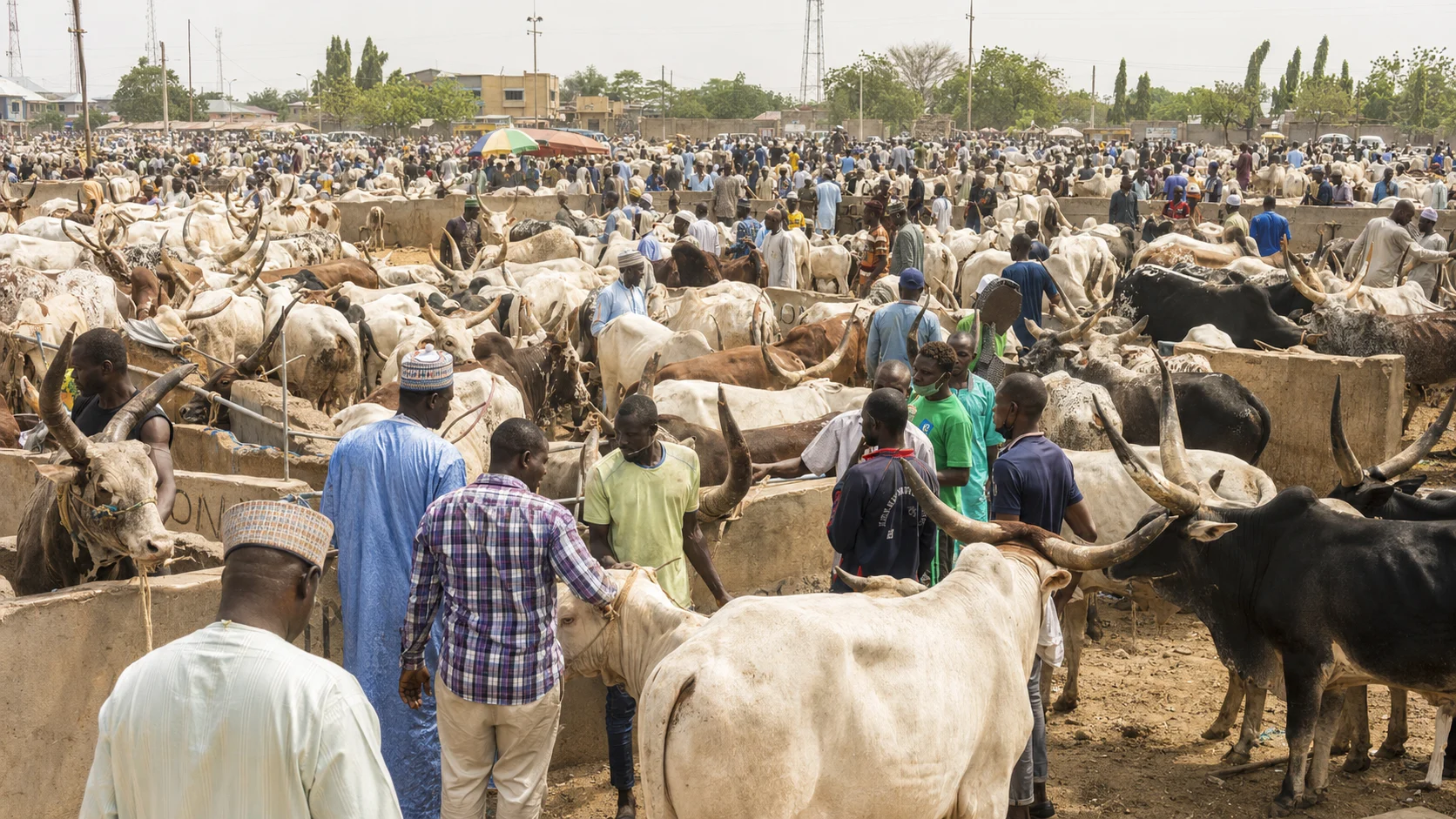
Every year, cattle prices across Africa spike in the weeks before Eid al-Adha. Here is how to read the surge, sell at the top, and buy without overpaying.
 Adamu BelloSenior Market Analyst · Kano, Nigeria
Why prices surge before Eid al-Adha
Eid al-Adha — known as Sallah in Nigeria and Tabaski in Senegal and Francophone West Africa — is the single largest driver of livestock demand on the African continent. It is celebrated by an estimated 500 million Muslims across Africa, and at its heart is the ritual sacrifice, the Qurbani: every household that can afford it slaughters a healthy animal and shares the meat among family, neighbours and the poor.
That religious obligation translates into a concentrated, continent-wide demand spike unlike anything else in the cattle calendar. In Nigeria alone, an estimated 6 million animals — cattle, rams and goats — are purchased for Sallah every year, most of them in a window of just four to six weeks. The economics are simple and unforgiving. Cattle supply is what economists call inelastic in the short term: you cannot grow a bull to slaughter weight in a month, so the number of market-ready animals is essentially fixed when the festival arrives. Demand, meanwhile, balloons. When a fixed supply meets a surge of buyers, there is only one possible outcome for price, and it is up. A healthy bull that sells for ₦1.2–1.5 million in an ordinary month can fetch ₦2–2.5 million at the peak.
The nature of the sacrifice itself shapes the demand. A cow or bull counts as a single sacrifice that can be shared among up to seven families; a sheep or goat is an individual offering; a camel, in the far north and the Sahel, counts the same as a cow. Because both cattle and rams are valid sacrifices, demand surges across the whole livestock market at once — rams and bulls climb together, and even goat prices firm up. For a seller, that means the rising tide lifts every animal you own. For a buyer, it means there is no cheap corner of the market to hide in once the season peaks.
There is also a quality dimension that ordinary trading does not have. The sacrifice must be a sound, healthy, unblemished animal — Islamic law disqualifies animals that are visibly sick, badly injured, blind in one eye, or severely emaciated. So at Eid, condition and visible health are worth more than at any other time of year. A fat, glossy, sound bull commands a premium precisely because buyers are not just buying meat, they are fulfilling a religious duty that requires a worthy animal.
The price curve: when prices peak and crash
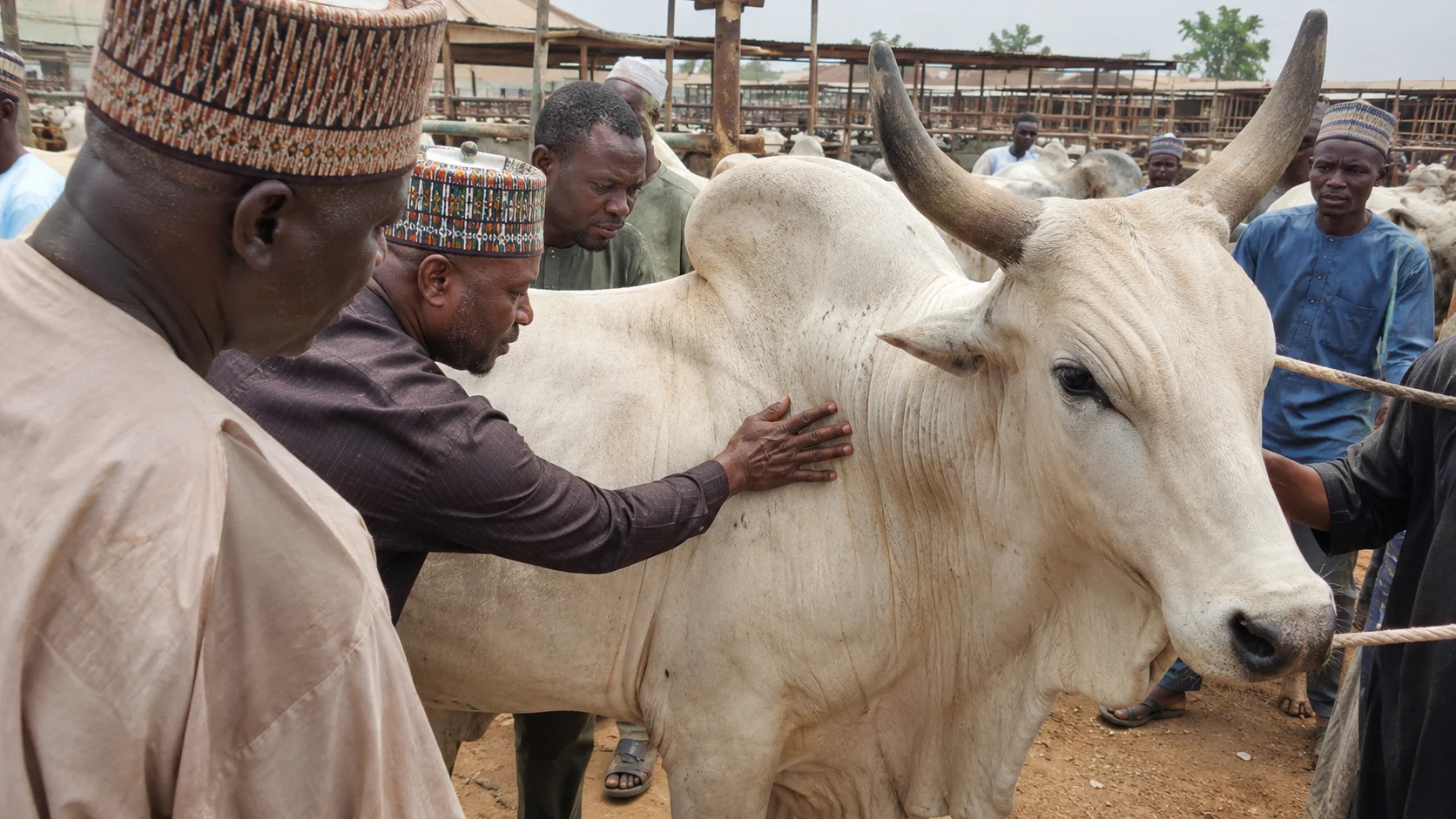
The Eid surge is remarkably predictable in shape, even though its exact size varies year to year with the economy, the exchange rate and the size of the available herd. If you learn the curve, you can time your trade with confidence instead of guessing. Here is how a typical season unfolds, week by week:
- 6 weeks before: Prices sit at baseline. Smart, experienced buyers start shopping now, quietly securing animals before the crowd arrives and while sellers are still relaxed.
- 4 weeks before: Prices climb 10–15% above baseline. This is the best value window for buyers — demand is real but not yet frantic, there is a genuine choice of animals, and sellers are still willing to deal rather than hold out.
- 2 weeks before: Prices accelerate to 25–40% above baseline as urban buyers flood the markets and the festival becomes the only topic in town.
- 1 week before: 40–60% above baseline. Panic buying sets in; latecomers who left it too long now pay whatever it takes to avoid arriving at Eid empty-handed.
- 2–3 days before: The absolute peak — often 50–60%+ above baseline for a prime, sound animal. This is the seller's dream and the buyer's nightmare.
- Day of Eid: Prices wobble and unsold stock starts to drop as sellers face the prospect of taking animals home.
- 1 week after: Prices crash, frequently 20–30% below the original baseline.
Why does the post-Eid crash happen so hard? Because the sellers who missed the peak are now trapped. Their transport costs are already sunk, the animals need feeding and watering every single day they remain unsold, and a herder who walked or trucked cattle hundreds of kilometres to a distant city market cannot simply hold them and wait for next year. Herds that arrived late, plus every animal that didn't sell before the festival, flood the market at the same moment — and prices collapse under the weight of desperate supply. For a patient cash buyer, the week after Eid can deliver the cheapest cattle of the entire year.
Consider a worked example. Suppose your baseline bull is worth ₦1.4 million. At the four-week mark a buyer might pay ₦1.6 million; at the two-day peak, ₦2.2 million; and the week after, a distressed seller might let an identical animal go for ₦1.05 million. That is a swing of well over a million naira on the same bull, driven entirely by timing. The single most important lesson is this: for sellers, the sweet spot is the second-to-last week, when demand is strong but desperation has not yet forced you to accept any offer thrown at you. For buyers, it is the four-week mark — or, if value matters more than convenience, the week after the festival.
Eid al-Adha 2026 prices by country
Prices vary enormously by country, currency and breed. Here is what the 2026 season looked like across Africa's major markets, and what it tells you about where to buy and where to sell.
Nigeria 🇳🇬
Nigeria is the continent's largest Sallah market by volume. Pre-Eid, a mature White Fulani bull in Lagos reached ₦1.8–2.5 million, up sharply from a ₦1.2–1.5 million baseline. Red Bororo cattle, the classic Fulani nomadic animal, ran ₦1.5–2 million, while rams ranged from ₦80,000 for a modest animal to ₦350,000 and well beyond for a prize ram with a good coat and horns. The most important fact for any trader is the geography of price: source markets in Kano and Maiduguri were 30–40% cheaper than the destination markets of Lagos and Port Harcourt. That gap is the transport cost, the feeding on the road, and the chain of middlemen who move the animals south. The biggest markets were Kara in Ogun State (the main Lagos supply point, trading daily), the Maiduguri Monday Market in the northeast, and Durumi in Abuja. Browse live Nigeria cattle prices and the Sokoto Gudali, a heavy northern breed favoured by buyers who want maximum animal for their money.
Ghana 🇬🇭
Pre-Eid prices in Ghana climbed to GHS 12,000–20,000 for a good bull, with the Kumasi abattoir area acting as the national price-setter. The cedi-to-CFA exchange rate matters enormously here, because much of Ghana's Eid supply walks in from Burkina Faso and Mali — when the cedi weakens, imported cattle become dearer overnight, and the whole market reprices. The 2026 season was also notable for the early trading at the new Volivo International livestock market, part of Ghana's push to formalise and modernise its cattle trade. See Ghana prices.
Kenya 🇰🇪
In Kenya, Eid demand concentrates geographically: the coastal Muslim communities around Mombasa, the Somali-Kenyan trading district of Eastleigh in Nairobi, and the northeastern counties. Boran and Sahiwal animals are preferred for their size and condition, and because Kenya's Muslim population is a smaller share of the whole than in the Sahel, the price lift was a more modest 15–25% over baseline. That makes Kenya a useful illustration that the size of the Eid surge tracks the local concentration of demand. See Kenya prices.
Senegal 🇸🇳
Tabaski is Senegal's single biggest commercial event of the year — a market worth well over 300 billion CFA francs. Here the focus is overwhelmingly on rams rather than cattle: tradition strongly favours the individual sheep sacrifice, and a premium Ladoum ram, bred for size and beauty, can reach XOF 2–3 million, the price of a whole bull elsewhere. On the cattle side the Gobra Zebu dominates. The scale of Tabaski spending in Senegal is so large that the government and central bank actively manage the supply chain to keep animals flowing and prices in check. Explore Senegal prices.
Ethiopia 🇪🇹
In Ethiopia, domestic Eid demand competes directly with export demand for the same well-conditioned animals, which keeps a firm floor under prices. Birr devaluation has inflated prices further in local-currency terms, so a number that looks like a steep rise is partly a weaker currency rather than pure demand. The Harar and Dire Dawa markets, in the country's large Muslim east, are busiest during the season. See Ethiopia prices.
Cow vs ram vs goat: which to sacrifice
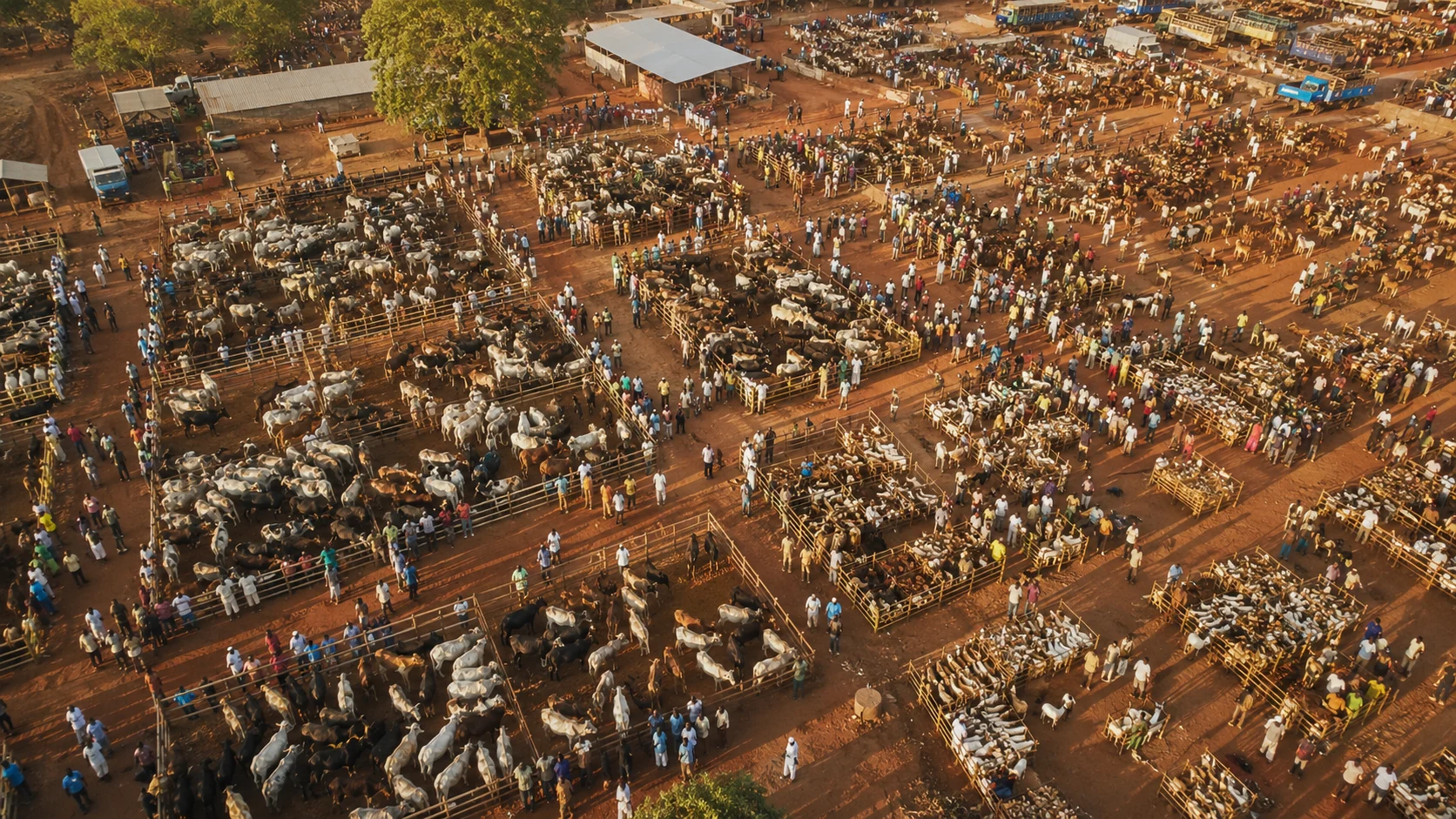
The Qurbani rules shape the economics of the season, and a little arithmetic can save a household real money. A cow or bull counts as seven shares — up to seven families can jointly sacrifice one animal and divide the meat — while a sheep or goat is a single, individual offering that cannot be shared.
That distinction drives a clear cost calculation. Take a ₦1.5 million cow split seven ways: each share costs about ₦214,000. Compare that with an individual ram at ₦150,000–250,000. In most African markets, sharing a cow works out cheaper per person than buying an individual ram, and it also yields more meat per share — which is exactly why cooperative cow-buying is so common in Sallah season, with neighbours, extended families and work colleagues pooling their money weeks in advance.
But convenience cuts the other way. An individual ram needs no coordination, no agreement on how to divide the carcass, and no chasing six other families for their contribution. It can be slaughtered at home with minimal fuss. Goats are the cheapest entry point of all and a dignified sacrifice for a smaller household, but they yield the least meat. The right choice depends on three things: your budget, the size of your household, and how much coordination you are willing to manage. A large extended family that trusts each other will almost always do best sharing a good bull; a busy nuclear household that values simplicity may happily pay the premium for a ram of its own.
Tips for smart buying during Eid
Whether you are buying one animal for your family or stocking a butchery for the festival rush, the same discipline protects your money:
- Buy 3–4 weeks before. This is the value sweet spot — a real choice of animals, before the final-week price spike turns every transaction into a scramble.
- Buy from source markets, not destination markets. Kano over Lagos, Maiduguri over Port Harcourt, Tamale over Accra. You pay the transport yourself, but you skip the middleman's margin, which is usually larger.
- Inspect the animal properly. Check the weight and body condition by feeling the flank and ribs; read the teeth for age; examine the hooves for soundness and any sign of foot rot; and look at the eyes and nose for discharge or dullness that signals illness. A sick animal is not only a bad buy — it is invalid for sacrifice.
- Negotiate in groups. Pooled buying gives you leverage with the seller and spreads the transport cost across several families, lowering everyone's effective price.
- Sort out transport before you buy. Agree the cost upfront, check the truck's condition and that it is not dangerously overloaded, and plan water and rest stops. Cattle can lose noticeable condition on a single hot, crowded, day-long journey — and a thinner animal is worth less when it arrives.
- Consider buying after Eid if you value money over timing. The post-Sallah crash offers the cheapest cattle of the year for anyone with somewhere to keep them.
Breed choice matters for sacrifice, too, and getting it right means more meat or more savings for the same money. The White Fulani offers the best all-round balance of size, condition and meat yield and is the default choice across northern Nigeria. The Sokoto Gudali is prized for its heavy, compact build — a lot of carcass for the price, ideal when several families are sharing. Budget buyers in the southern forest belt often choose the small, hardy, trypanotolerant Muturu, which thrives where bigger zebu cattle would sicken. Match the breed to your budget and to the number of shares you need to fill, and you will never overpay for the wrong animal.
Preparing for Eid al-Adha 2027
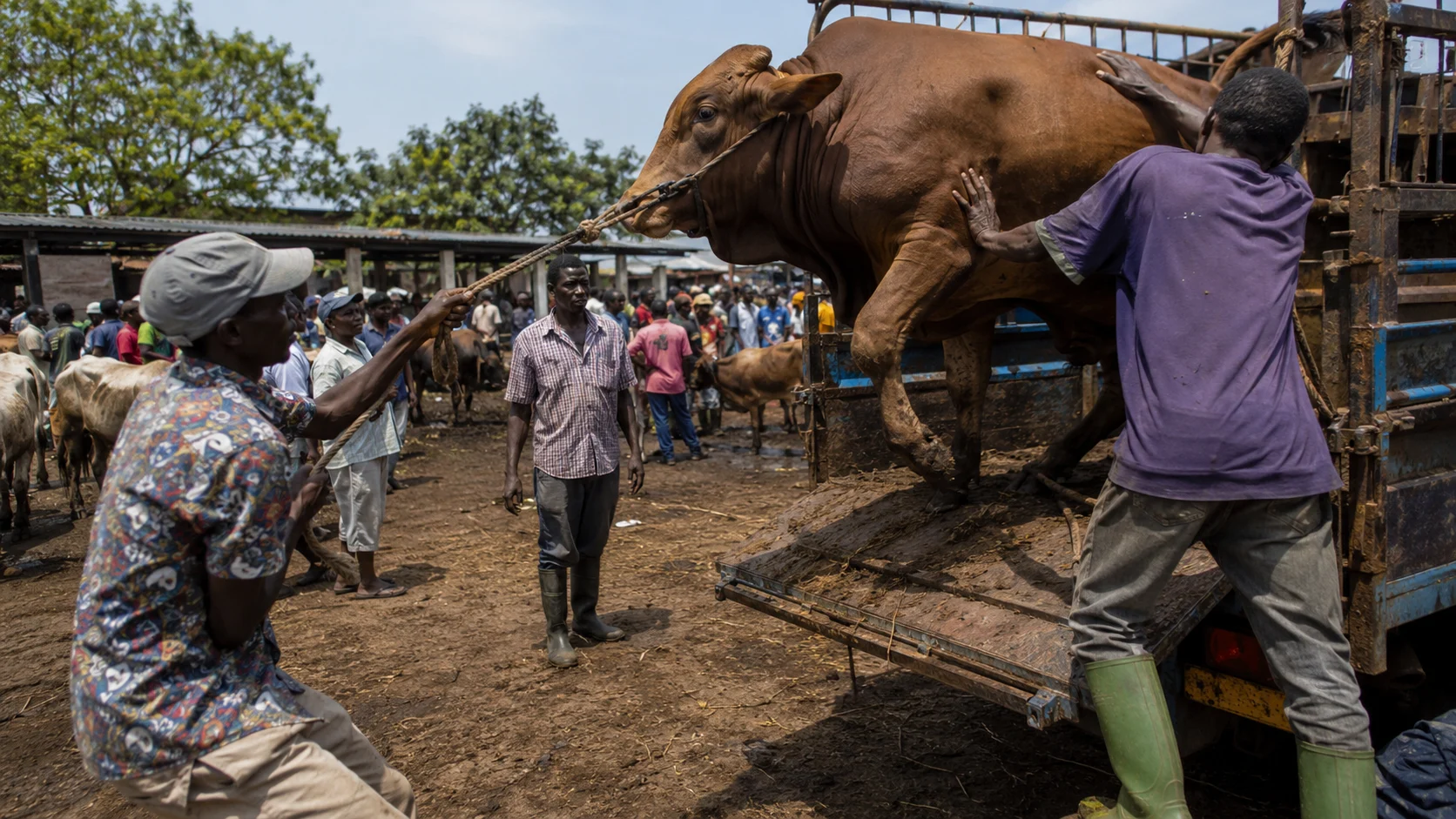
Eid al-Adha 2027 is expected around mid-May 2027 — the Islamic calendar shifts roughly 11 days earlier each year against the Gregorian one, so the festival creeps steadily back through the seasons. That timing matters for sellers, because it determines what your pasture and feed will look like in the run-up, and therefore how easily you can put condition on your animals.
If you are a seller, the planning starts months ahead. Condition your animals so they peak in body weight in the final fortnight before the festival, not too early (when they may slip back) and not too late (when they will not look their best in the ring). Time any deworming and tick treatment so the animal is glossy and sound at sale. If you are a buyer, start monitoring prices about six weeks out, so you can recognise the true baseline before the climb begins and judge each subsequent offer against it.
The single best preparation, for buyer and seller alike, is information. Sign up for free CattlePrice price alerts so you know the moment Eid-season pricing starts moving in your specific market, and use the Herd Valuation tool to benchmark a realistic budget or reserve price before you travel. Knowing the going rate before you arrive is the difference between trading from a position of strength and being at the mercy of whoever shouts loudest in the market.
Get ahead of the next surge
The Eid price curve rewards the prepared and punishes the late. Whether you are timing a sale to catch the second-to-last-week peak, or hunting value in the post-Eid dip, the owners who do best are simply the ones who saw the move coming and acted on a plan instead of a panic.
One last word for producers, as opposed to one-off buyers: the Eid premium is a reward for planning your whole year around it. The owner who buys lean store cattle cheaply after one Eid, fattens them through the year on good grazing and cheap dry-season residues, and sells them prime into the next Eid peak captures both the weight gain and the seasonal price lift on the same animals. Done deliberately, that single annual cycle can outperform almost any other use of a fattening pen — and it turns the festival from a date on the calendar into the centrepiece of a deliberate, repeatable business plan.
Be the first to know when Eid-season pricing starts in your market: get free weekly WhatsApp price alerts, value your herd before you trade, and if you want to treat your cattle as a year-round financial asset rather than a once-a-year windfall, explore the CattleBank model.