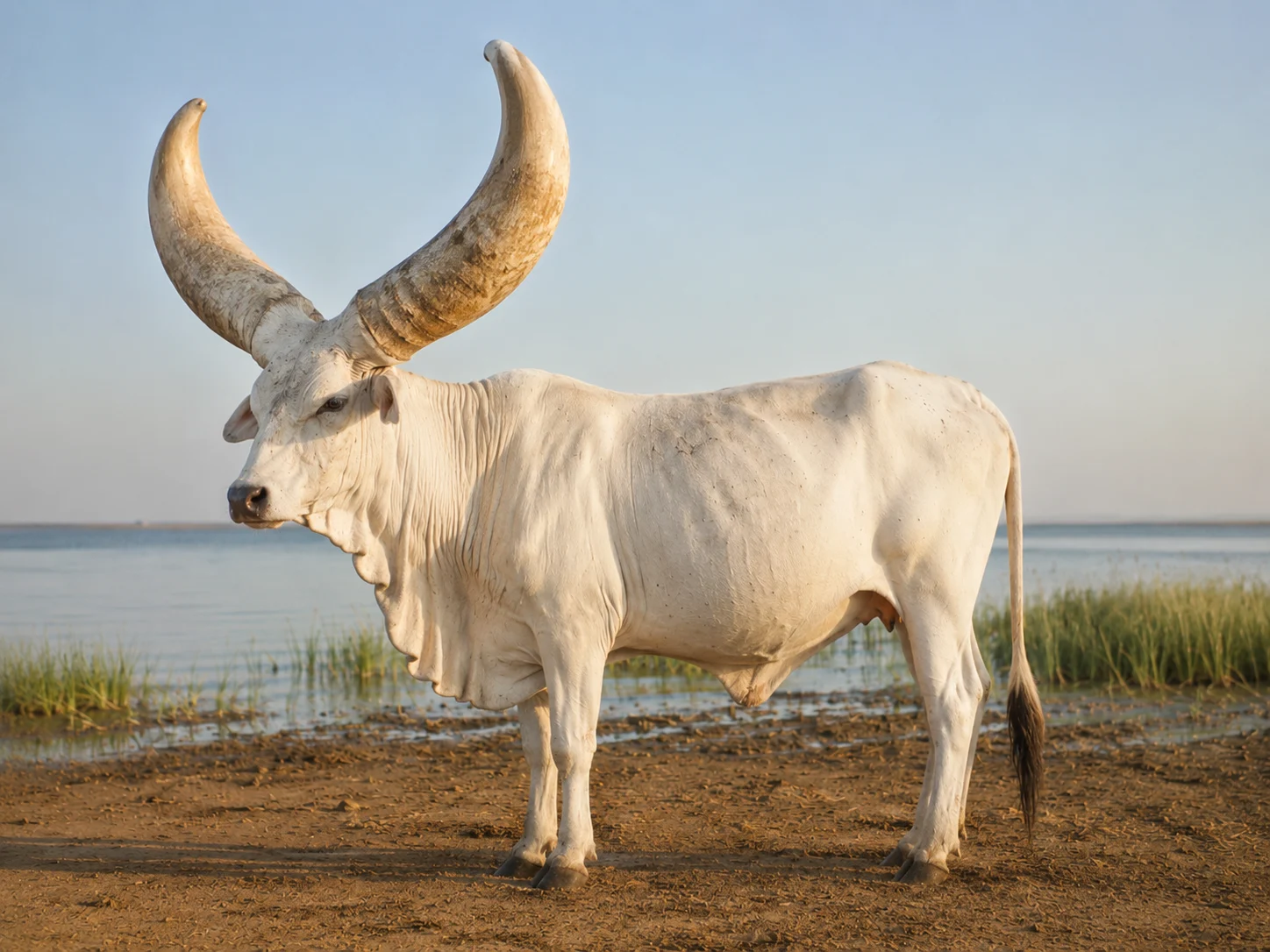
How much is a Kuri in Nigeria?
Nigeria buyers pay roughly ₦700K to ₦2.5M ($440–$1,575) for a Kuri in 2026 — the exact figure turns on size, age and the time of year. Those prices are quoted per head in NGN (₦). A small or young animal sits near the bottom of the range, a medium adult — the most commonly traded class — runs about ₦1.2M–₦1.7M, and a large, prime Kuri reaches ₦1.8M–₦2.5M at the top. Mature bulls run 400–550 kg and cows 300–400 kg; weight and body condition move the price more than anything else. Treat the figures as a guide and verify at your own market.
What drives Kuri prices in Nigeria?
The unusual bulbous-horned Kuri of the Lake Chad basin is a niche animal in Nigeria, and its price reflects local availability around the northeast more than national trends.
As a dual-purpose animal it is valued for both milk and meat, which widens its pool of buyers. Country-wide, the forces setting Kuri prices here are sharp demand spikes in the weeks before Sallah, transport and fuel costs along the north–south corridor, feed-price inflation. Disease status matters too: endemic foot-and-mouth disease caps export potential and, when it flares, can shut market corridors at short notice. Over the past year, Nigeria cattle prices have moved +100%, an upward trend that has carried this breed with it.
Kuri prices by market in Nigeria
Cattle are cheapest in the northern source markets of Kano and Maiduguri and dearest in Lagos and Abuja, where transport up the long north–south corridor adds 30–40% to the farm-gate price. Among the markets to know are Sokoto Central Market, Maiduguri Cattle Market, Kara Market, Lagos. The Kuri follows the usual pattern: lowest at the assembly markets near the herds, highest once it has been trucked to the urban demand centres. Browse the full Nigeria market directory to match this breed to the right selling point, and the Nigeria price overview to see how the Kuri compares with other breeds traded locally.
Best time to buy or sell a Kuri in Nigeria
The single biggest swing comes with Sallah (Eid al-Adha) and, to a lesser degree, Christmas: in the weeks beforehand, demand for sound animals like the Kuri surges and prices can leap 30–60% above the baseline. Supply matters as much as demand: during the Harmattan dry season from November to March, when pasture browns off, animals lose condition and many owners are forced to sell, which softens prices for buyers but punishes sellers. In short: sell your Kuri when demand peaks before the festivals, and buy in the lean season when others are offloading cheap. Our Eid price-surge guide and dry-season strategy map out the calendar in detail.
Is the Kuri a good investment in Nigeria?
With Nigeria prices up +100% over the year, a well-kept Kuri has been appreciating in nominal terms, and deep resale demand makes it quick to turn back into cash. Whether it pays depends on your costs and discipline more than the breed alone. Run the numbers before you commit: the cattle-as-asset calculator pits a Kuri against the bank and gold, the breed ROI tool ranks it beside rival breeds, and the feedlot calculator tests a fattening cycle. Use the herd valuation tool to see what your Kuri are worth now, or look at the CattleBank model to earn a return on them.
Kuri in Nigeria: frequently asked questions
How much is a Kuri bull in Nigeria?
Expect a full-grown Kuri bull in Nigeria to fetch around ₦1.8M–₦2.5M (up to $1,575) in 2026, with lighter or younger bulls below that depending on condition and timing.
What is the most expensive Kuri in Nigeria?
The most you will pay is for a big, well-conditioned Kuri — ₦2.5M or more — particularly in the run-up to Sallah (Eid al-Adha) and.
Where can I buy Kuri cattle in Nigeria?
Look to markets such as Sokoto Central Market, Maiduguri Cattle Market, Kara Market, Lagos, and buy nearer the source for the best price. See the full Nigeria market directory for trading days and locations.
Is the Kuri good for dual-purpose use?
The Kuri is a dual-purpose breed, giving both milk and meat. Being good for both milk and meat broadens its buyer base and its value. Unique inflated bulbous horns.