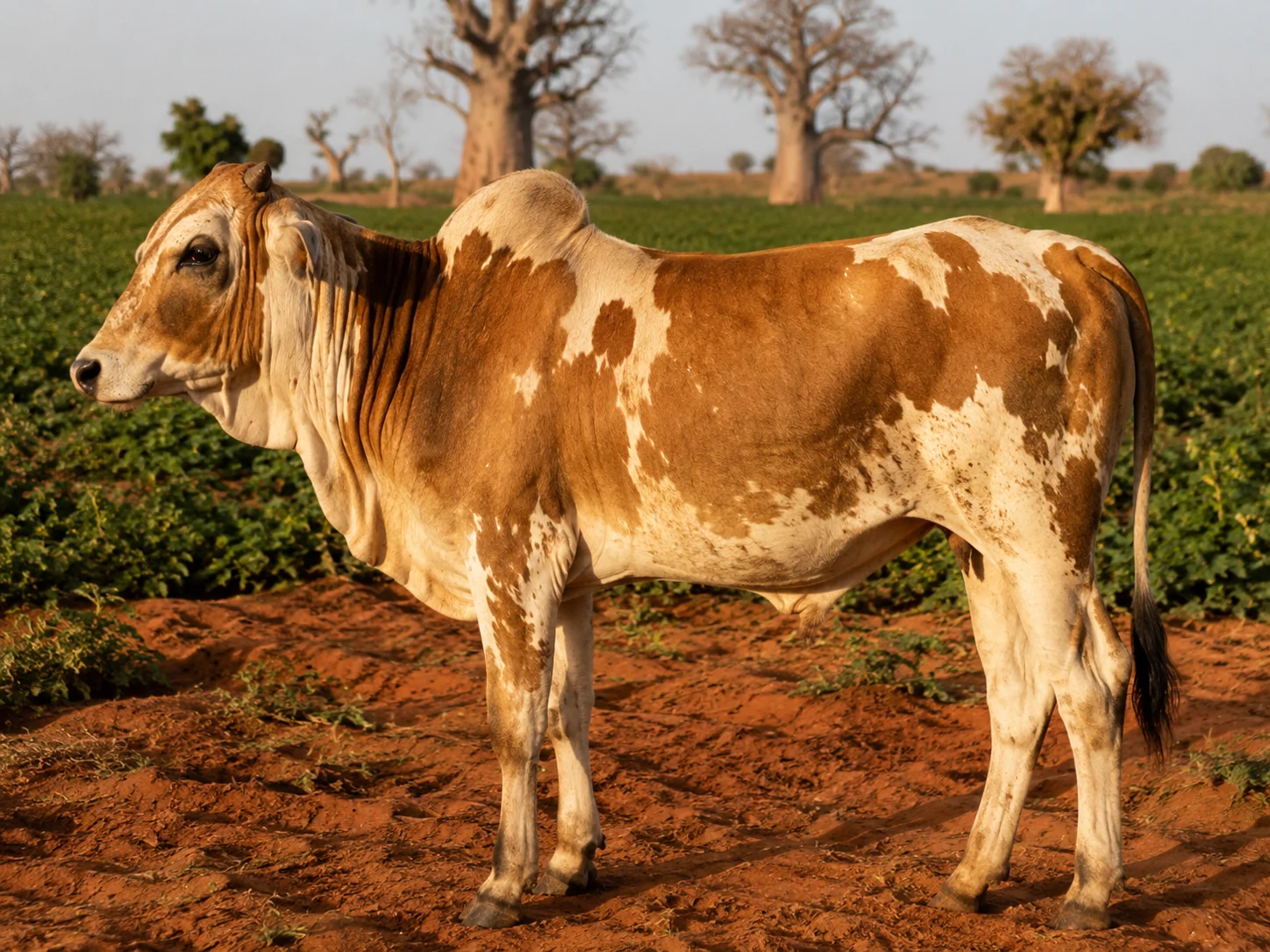
How much is a Djakoré in Senegal?
In 2026, expect to pay between XOF325K and XOF1.2M ($540–$1,935) for a Djakoré in Senegal, with weight and condition the biggest factors. Quoted per head in XOF (XOF), the range runs from young animals at the floor, through medium adults at roughly XOF540K–XOF775K, up to prime Djakoré at XOF805K–XOF1.2M. For reference, mature Djakoré bulls weigh 300–400 kg and cows 230–300 kg, so heavier, better-conditioned animals naturally sell for more. These are editorial estimates — judge the animal and confirm locally before trading.
What drives Djakoré prices in Senegal?
The Djakoré, a trypanotolerant Gobra × N'Dama cross, is valued where tsetse pressure rules out pure zebu, giving it steady niche demand around Tabaski.
Being good for both milk and meat broadens its buyer base and its value. Zoom out and the Djakoré market in Senegal turns mainly on the overwhelming annual surge of Tabaski demand, competition with imported Sahelian stock, the CFA franc's euro peg, which keeps import costs relatively stable. Disease status matters too: foot-and-mouth disease is endemic, which keeps the country out of premium export markets and can freeze trade during outbreaks. Over the past year, Senegal cattle prices have moved Stable, holding broadly steady. The Djakoré's natural resistance to trypanosomiasis also lowers its cost of keeping, which buyers in affected areas will pay extra for.
Djakoré prices by market in Senegal
The historic Dahra market and the Louga-region sales feed Dakar, where Tabaski demand sets the annual price peak. Among the markets to know are Dahra Djoloff Market. For the Djakoré the geography of price is simple — buy near the source and pay less, buy in the city and pay for the transport and the traders in between. Browse the full Senegal market directory to match this breed to the right selling point, and the Senegal price overview to see how the Djakoré compares with other breeds traded locally.
Best time to buy or sell a Djakoré in Senegal
Time everything around Tabaski (Eid al-Adha), the country's single biggest livestock event: the pre-festival scramble for a sound Djakoré routinely lifts prices 30–60% above baseline. The other half of the picture is supply — through the long dry season, when the herds trek south for pasture, forced sales of thin animals pull the market lower. The practical takeaway for the Djakoré is to sell into the festival peak and, if you are buying to keep, shop in the quiet season when distressed sales are common. Our Eid price-surge guide and dry-season strategy map out the calendar in detail.
Is the Djakoré a good investment in Senegal?
Senegal prices have held steady, so a Djakoré mainly preserves value rather than rapidly appreciating, and deep resale demand makes it quick to turn back into cash. Whether it pays depends on your costs and discipline more than the breed alone. Model a buy-and-fatten cycle with the feedlot profitability calculator, compare the Djakoré against other breeds with the breed ROI tool, or weigh your whole herd against a bank deposit using the cattle-as-asset calculator. Check your herd's current worth anytime with the herd valuation tool, and consider the CattleBank model to put that value to work.
Djakoré in Senegal: frequently asked questions
How much is a Djakoré bull in Senegal?
Expect a full-grown Djakoré bull in Senegal to fetch around XOF805K–XOF1.2M (up to $1,935) in 2026, with lighter or younger bulls below that depending on condition and timing.
What is the most expensive Djakoré in Senegal?
The most you will pay is for a big, well-conditioned Djakoré — XOF1.2M or more — particularly in the run-up to Tabaski (Eid al-Adha).
Where can I buy Djakoré cattle in Senegal?
Look to markets such as Dahra Djoloff Market, and buy nearer the source for the best price. See the full Senegal market directory for trading days and locations.
Is the Djakoré good for dual-purpose use?
The Djakoré is a dual-purpose breed, giving both milk and meat. Its dual milk-and-meat role gives it two markets and a wider set of buyers. Gobra × N'Dama trypanotolerant cross.