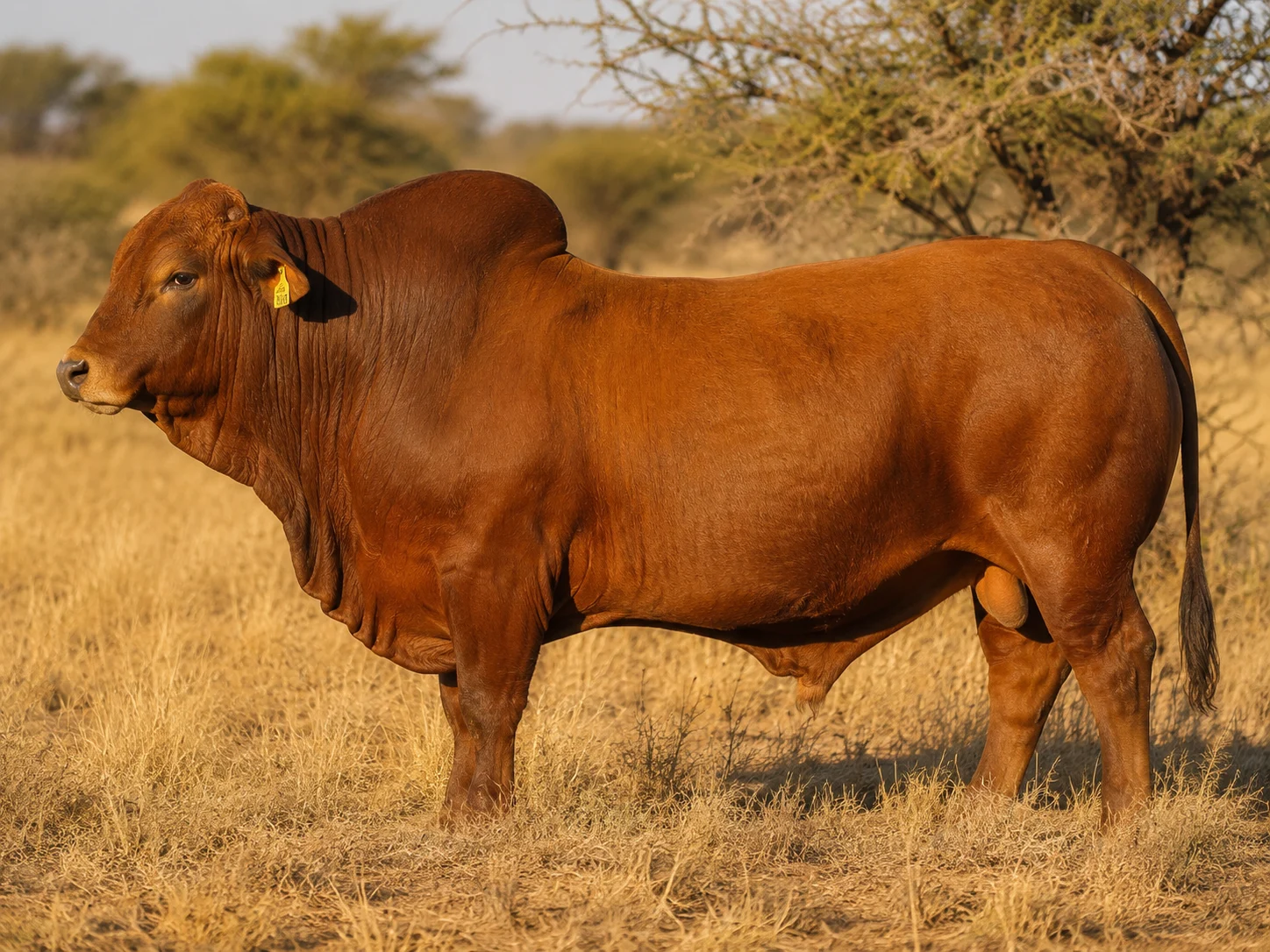
How much is a Simbra in South Africa?
South Africa buyers pay roughly R13K to R48K ($745–$2,675) for a Simbra in 2026 — the exact figure turns on size, age and the time of year. Those prices are quoted per head in ZAR (R). A small or young animal sits near the bottom of the range, a medium adult — the most commonly traded class — runs about R22K–R32K, and a large, prime Simbra reaches R34K–R48K at the top. Mature bulls run 800–1000 kg and cows 500–650 kg; weight and body condition move the price more than anything else. Treat the figures as a guide and verify at your own market.
What drives Simbra prices in South Africa?
A Simmental × Brahman composite, the fast-growing Simbra blends frame and heat tolerance, which keeps it in strong demand among commercial South African fatteners.
What it is worth comes down to growth, carcass weight and the strength of beef demand. Country-wide, the forces setting Simbra prices here are FMD outbreaks that periodically disrupt exports, national auction benchmarks for weaners and carcasses, maize and feed prices driving feedlot demand. Disease status matters too: its FMD-free-with-vaccination status underpins export access and helps support prices. Over the past year, South Africa cattle prices have moved -3%, a softening that has weighed on values.
Simbra prices by market in South Africa
Province-by-province auctions set the price on a weight basis every week; stud-registered animals trade well clear of the commercial run. Among the markets to know are Cartwright's / Karu. The Simbra follows the usual pattern: lowest at the assembly markets near the herds, highest once it has been trucked to the urban demand centres. Browse the full South Africa market directory to match this breed to the right selling point, and the South Africa price overview to see how the Simbra compares with other breeds traded locally.
Best time to buy or sell a Simbra in South Africa
Demand firms around Christmas and Easter, rather than Eid, the main seasonal buying windows for Simbra here. Supply matters as much as demand: during the dry winter from May to September, animals lose condition and many owners are forced to sell, which softens prices for buyers but punishes sellers. In short: sell your Simbra when demand peaks before the festivals, and buy in the lean season when others are offloading cheap. Our Eid price-surge guide and dry-season strategy map out the calendar in detail.
Is the Simbra a good investment in South Africa?
A -3% dip in South Africa prices means a Simbra only pays as an asset with careful buying and selling, and strong, liquid resale demand makes it easy to convert back to cash. Whether it pays depends on your costs and discipline more than the breed alone. Run the numbers before you commit: the cattle-as-asset calculator pits a Simbra against the bank and gold, the breed ROI tool ranks it beside rival breeds, and the feedlot calculator tests a fattening cycle. Use the herd valuation tool to see what your Simbra are worth now, or look at the CattleBank model to earn a return on them.
Simbra in South Africa: frequently asked questions
How much is a Simbra bull in South Africa?
A mature, prime Simbra bull in South Africa sells at the top of the range, roughly R34K–R48K ($2,675 at the upper end) in 2026. Younger or lighter bulls cost less; the exact price turns on weight, condition and season.
What is the most expensive Simbra in South Africa?
Top prices go to heavy, prime Simbra (and registered stud stock where it exists), which can hit R48K and beyond, peaking around Christmas and Easter.
Where can I buy Simbra cattle in South Africa?
Look to markets such as Cartwright's / Karu, and buy nearer the source for the best price. See the full South Africa market directory for trading days and locations.
Is the Simbra good for beef?
The Simbra is a beef breed. As a beef animal, its worth follows daily gain, final weight and how hungry the meat market is. Fastest-growing SA composite breed.